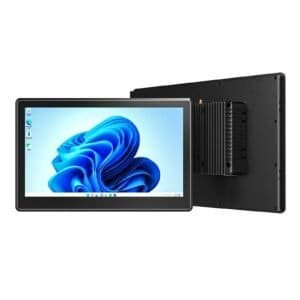
By Emdoor Information Team | December 3, 2025
The era of AI as a mere cloud-based novelty is over. We have entered the phase of ubiquitous intelligence, where AI seamlessly integrates into our devices, environments, and machinery.
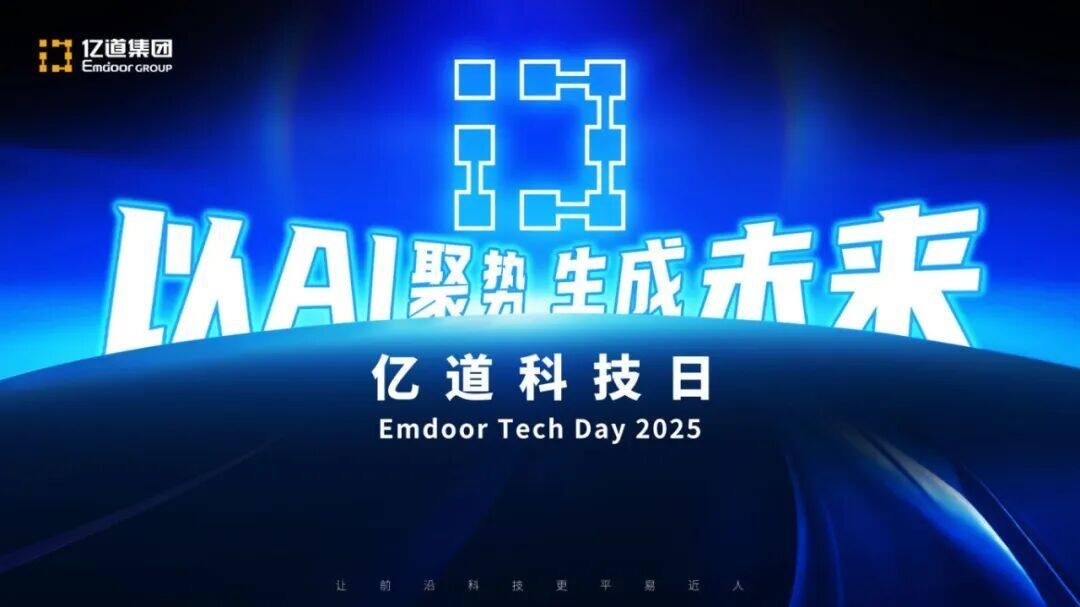
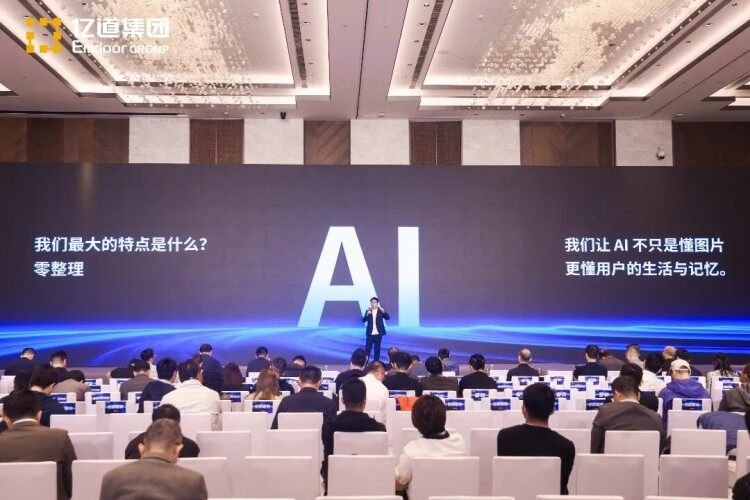
On December 3, 2025, Emdoor Group hosted its annual “Emdoor Tech Day” at the Raffles Hotel in Shenzhen Bay. Under the ambitious theme, “Gathering Momentum with AI, Generating the Future,” Emdoor unveiled a strategic transformation.
Before a gathering of industry leaders, developers, and partners, Emdoor announced its evolution from a hardware manufacturer to a Scenario Computing System Builder. This shift centers on “Edge AI + Cloud-Edge Collaboration,” demonstrating how Emdoor is translating computing power into tangible productivity across six major scenarios: Personal, Home, Enterprise, Industrial, Wearable, and Robotics.
This article delves into Emdoor’s 2025 strategy, showcasing how its full-stack technical architecture is poised to revolutionize industries from rugged computing to smart homes.
I. The Strategic Pivot: From Hardware to Scenario Intelligence
Addressing the long-standing debate between Cloud AI’s processing power and Edge AI’s low latency and privacy, Emdoor’s Tech Day 2025 presented a clear resolution: not an “either/or” choice, but a collaborative ecosystem.
The AESOF Framework: A New Digital Foundation
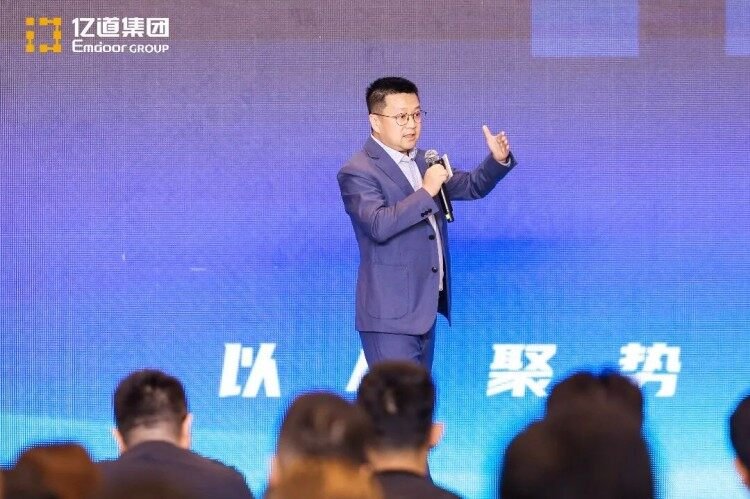
Dr. Wu Junlong of the Emdoor Research Institute introduced the foundational AESOF (AI Edge Server Open Framework). Recognizing that AI competition has shifted from model parameters to scenario application, Emdoor innovates from the edge device upwards, complementing cloud models.
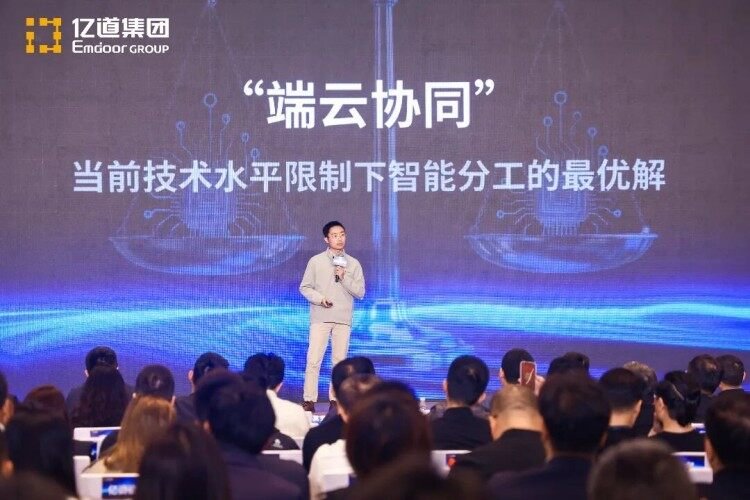
Emdoor’s “Cloud-Edge Synergy” philosophy leverages the strengths of both:
- The Edge: Handles high-frequency, real-time, and privacy-sensitive tasks (e.g., a rugged tablet detecting a defect on a factory line).
- The Cloud: Manages complex reasoning and massive model training.
AESOF creates a value loop where “The Cloud makes the Edge smarter, and the Edge makes the Cloud more realistic,” transforming every device into an intelligent network node.
The Six-Scenario Matrix and “Three-in-One” Infrastructure
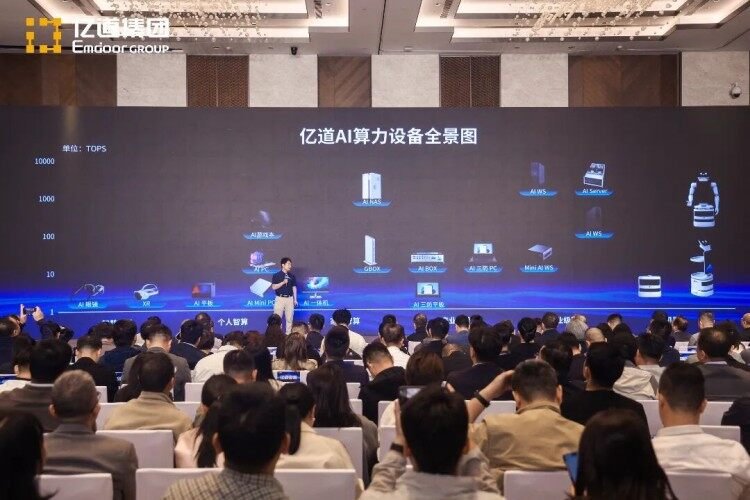
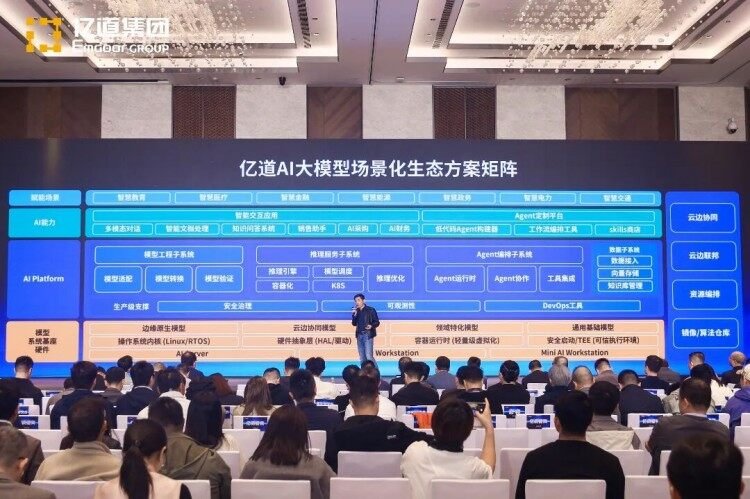
Ye Yuanyang, Product Director at Emdoor Research, unveiled the “Emdoor AI Computing Solution Matrix,” the operational blueprint for 2025 and beyond. This matrix targets the six critical scenarios introduced earlier:
- Personal: AI PCs and Assistants.
- Home: Private Cloud and Smart Storage.
- Enterprise: Workstations and Servers.
- Industrial: Edge Computing and Machine Vision.
- Wearable: XR and AI Glasses.
- Robotics: Embodied Intelligence.
As Ye stated, “In the past, products defined the scenario. Today, the scenario defines the product.” This strategic shift is supported by Emdoor’s “three-in-one” infrastructure: Hardware Computing Power + AESOF Platform + AI Atomic Capabilities.
II. Industrial AI: Rewriting Manufacturing Rules
For partners in the rugged and industrial sectors, Wang Qian, Deputy General Manager of Emdoor Information, highlighted the transformative potential of industrial AI.
The AI BOX: The Smart Factory’s Brain
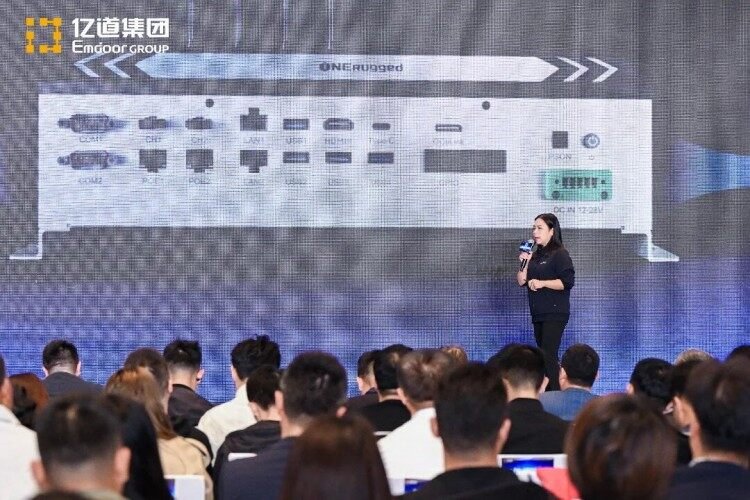
To overcome “Data Islands” between OT and IT in traditional industrial environments, Emdoor Information introduced the Industrial AI BOX Solution. This solution bridges gaps, accelerates decisions, and reduces reliance on human experience.
- Specs: Features 126 TOPS of edge computing power and 96GB of video memory.
- Performance: Achieves a millisecond-level closed loop of “Perception-Decision-Execution.”
Solving “Long-Tail” Defects with Large Model Industrial Vision
The AI BOX addresses the challenge of detecting rare “long-tail” anomalies in industrial machine vision, which often elude standard algorithms. Wang Qian explained how it utilizes Large Model Industrial Vision for:
- Generalization: The system identifies rare defects by “drawing inferences about other cases from one instance,” eliminating the need for extensive training images.
- Dynamic Evolution: Production lines continuously “learn.”
- Rapid Deployment: Emdoor’s end-to-end development platform reduces deployment time from weeks to hours.
Wang Qian emphasized, “Emdoor is not just delivering equipment; we are delivering the next generation of productivity itself.”
III. The AI PC Revolution: From “Intern” to “Executive”
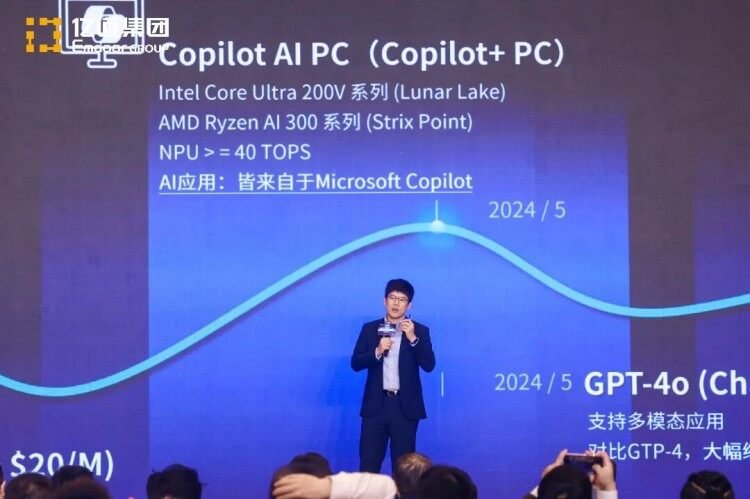
Addressing criticisms of AI PCs as mere gimmicks, Li Zhenyu, General Manager of Emdoor Digital, outlined an evolutionary path for these devices from L0 to L4, aiming to transform AI from a passive tool into a proactive business supervisor.
The “Xiao Yi” AI Assistant
The new “Xiao Yi AI Assistant” demonstrated its advanced natural language processing, enabling:
- Workflow Automation: Complex commands like “Adjust system settings, import this video, edit it, generate subtitles, and save it” are executed across applications in seconds.
- Hardware Muscle: Flagship AI PCs feature 180 TOPS of on-device compute in ultra-light 14-inch (799g) or 16-inch (999g) chassis.
Overcoming Memory Bottlenecks with Phison
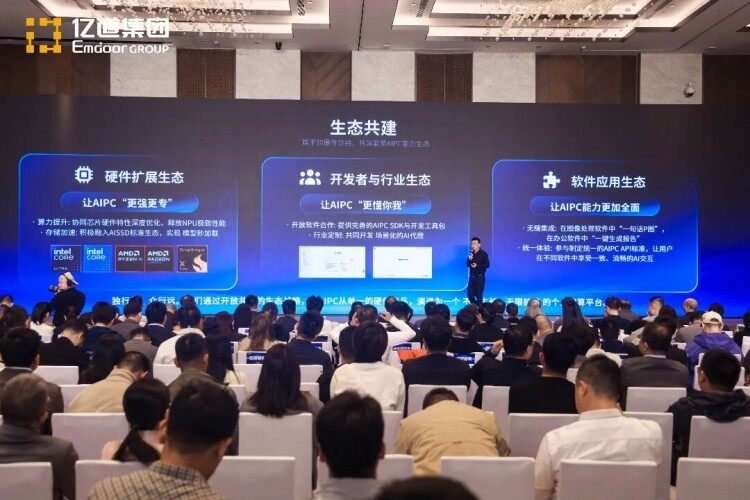
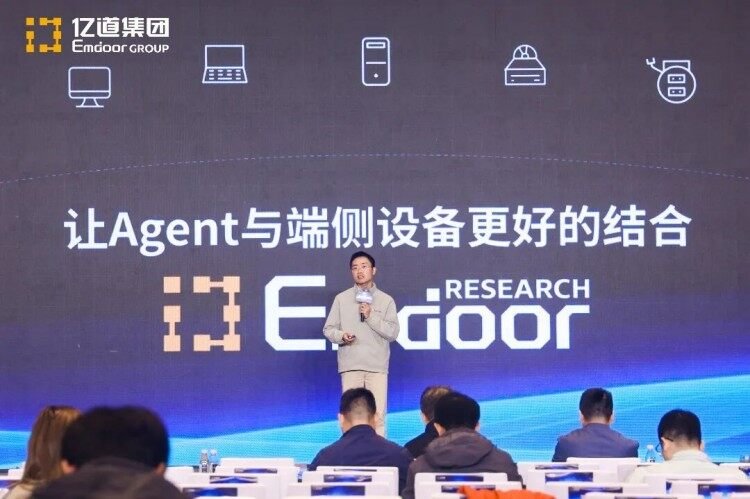
A significant challenge for local AI is memory consumption. Cai Zongxun from Phison Electronics, a strategic partner, presented the aiDAPTIV+ AI SSD technology. This innovation uses a MOE-Offload (Mixture of Experts) architecture to dynamically offload large model parameters to the SSD.
- Result: Reduced a GPT-OSS-20B model’s startup memory requirement from 25GB to 15.2GB.
- Impact: Lowers the barrier to entry, enabling massive models to run on standard PC hardware with minimal performance loss.
IV. Enterprise & Home: Accessible Computing Power
Enterprise: The “Drag-and-Drop” Supercomputer
Forecasting a 1.1 trillion RMB market by 2025, Wang Yongbing of Emdoor Supercomputing addressed the surging demand for compute. Emdoor’s solution is a range of AI Servers supporting models from 7B to 671B parameters.
The core innovation, the “Emdoor Supercomputing AI Intelligent Engine,” empowers business units to build custom AI agents with a drag-and-drop interface, drastically reducing deployment time from weeks to hours.
Home: The Privacy-First AI NAS
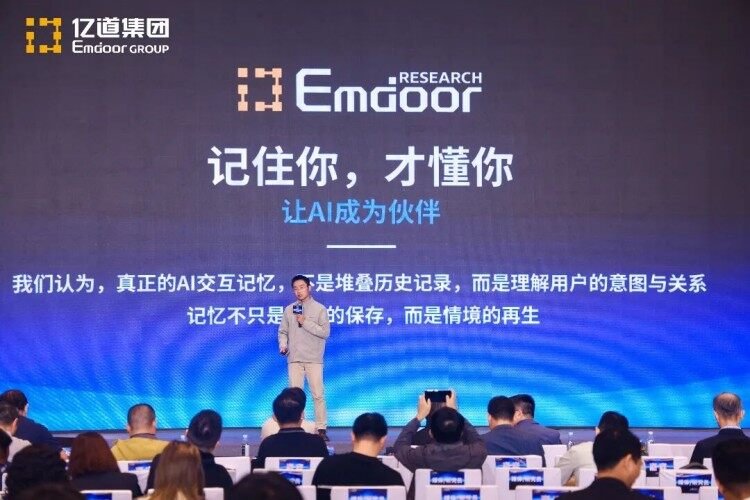
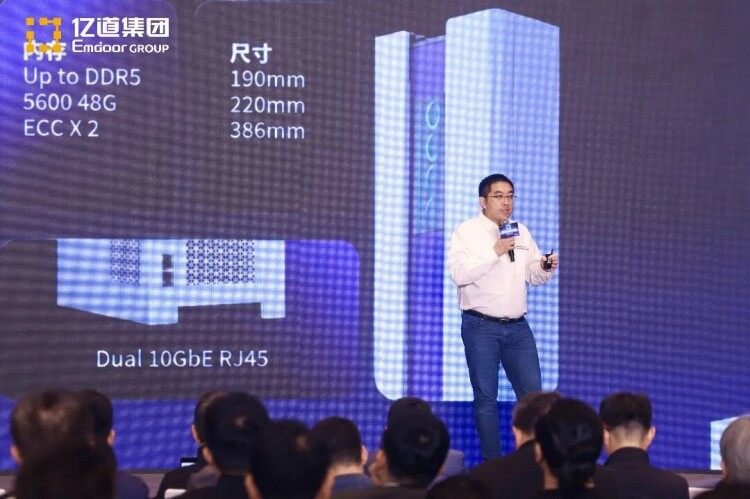
In collaboration with Yi You Yun and Hebpo Innovation, Emdoor unveiled the AI NAS (Network Attached Storage). This local “AI Memory System” addresses privacy concerns associated with public clouds.
- Solution: Utilizing local compute (up to 800 TOPS via AMD processors and full-sized GPUs), the AI NAS organizes photos, generates stories, and manages data entirely within the home.
- Redefinition: It transforms the NAS from a passive “digital warehouse” into an “active digital librarian.”
V. Wearables & Robotics: Expanding AI’s Reach
AI Glasses: The “Always-On” Assistant
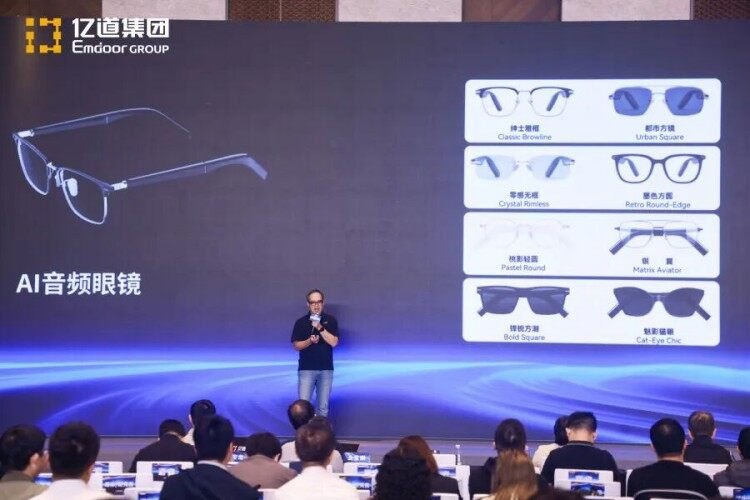
Wang Bin of Emdoor Virtual (EmdoorVR) presented a roadmap for AI glasses, envisioning them as a pivotal mobile AI entry point.
- Current Technology: AI Audio and Photo glasses, equipped with Sony sensors and EIS anti-shake, comparable to leading industry products.
- Future Technology (CES 2026): Emdoor plans to debut Binocular Full-Color and Monocular Full-Color display glasses, incorporating ring interaction and electrochromic lenses.
- Vision: A future where “One pair of glasses for one billion people.”
Robotics: Intelligent, Multi-Functional Cleaners
Song Huaichu of Yue Tong Tech, an Emdoor incubated company, launched the A10 Cleaning Robot. This robot embodies the “One Machine, Multiple Functions” concept, serving not only as a cleaner but also as a security guard, mobile ad display, and receptionist.
- Embodied AI: Powered by LLMs, the A10 understands vague voice commands and autonomously plans tasks, signifying a shift from “human adapting to machine” to “machine adapting to human.”
VI. Internal Transformation: Leading by Example
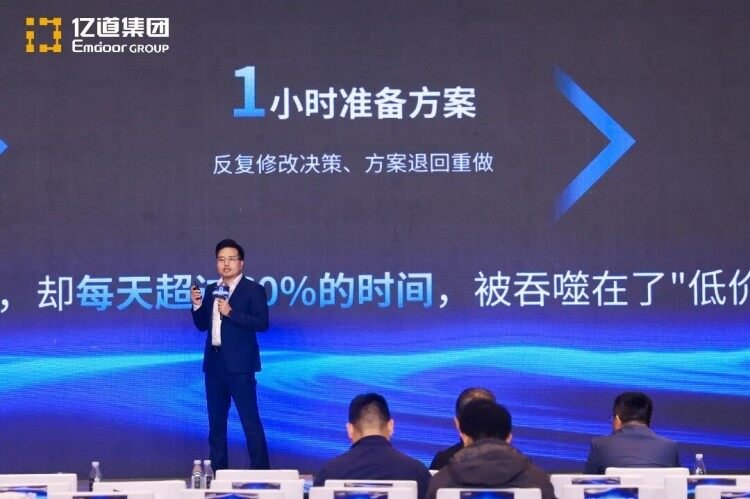
Emdoor not only develops AI solutions but also integrates them internally. Li Huaisheng, Sales Director of Emdoor Electronics, detailed how the Emdoor Research Institute empowered its sales team through the deployment of an internal AI Sales Workbench.
This workbench yielded significant improvements:
- Efficiency: Decision chain efficiency increased by 50%.
- Growth: Effective business opportunities tripled.
- Automation: The system automatically generates customer personas, pain point analyses, and pitch decks using a proprietary Knowledge Graph.
As Li aptly stated, “AI will not replace salespeople, but salespeople who use AI will replace those who don’t.”
Conclusion: An “All In AI” Future
Emdoor Tech Day 2025 was a clear declaration of Emdoor Group’s transition to an “All in AI” stance. By cultivating a full-stack ecosystem, including partnerships with IDEA Research on Federated Learning and the Agentic World ISV platform, Emdoor is democratizing access to intelligence.
The company is committed to simplifying AI deployment, making it accessible for diverse users—from a factory manager in Germany to a creative freelancer in Tokyo, or a family in Shanghai.
Emdoor Information pledges to be the “First Platform for New Technology Application,” inviting partners, developers, and clients to join in this transformative journey.
Together, let’s make the edge smarter.
Key Takeaways for Emdoor Partners
- Supply Chain Stability: Emdoor’s A-share listing and robust manufacturing infrastructure ensure reliable delivery of advanced AI hardware solutions at scale.
- Customization: The AESOF framework facilitates rapid customization of AI solutions for specific vertical markets, including medical, industrial, and logistics.
- Future-Proofing: Partnering with Emdoor provides access to cutting-edge advancements in NPU optimization, local LLMs, and ruggedized edge computing.
For more information on Emdoor’s AI solutions or to schedule a demo of the new AI BOX and AI PC series: