TRANSPORTATION · EMDOOR IPC CASE STUDY
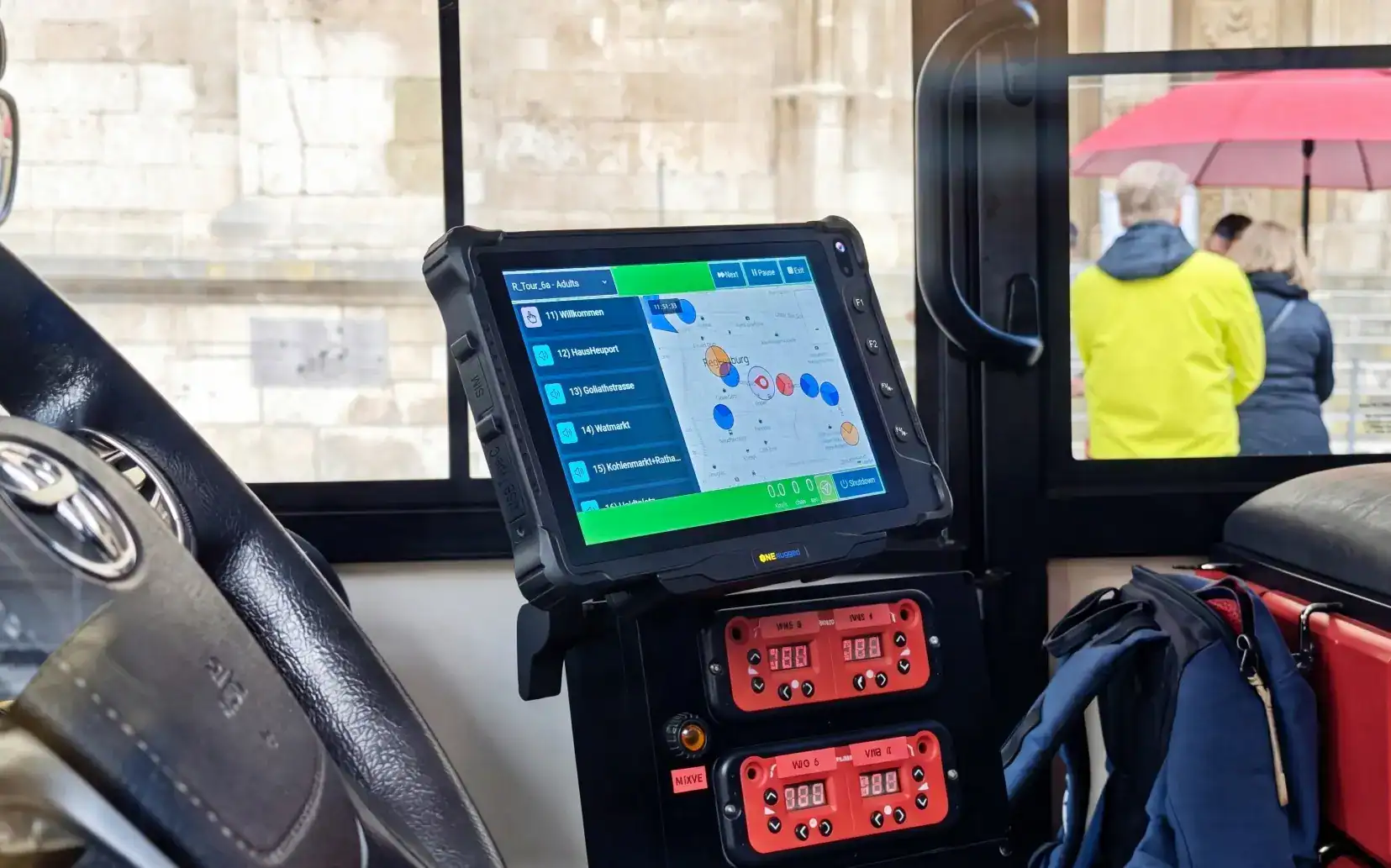
A tour bus vehicle PC is part of a passenger-service system. Its value depends on how route selection, location events and audio delivery work together throughout a trip. The installation must also remain understandable to the driver and maintainable across the fleet.
The operating challenge
Emdoor’s published case describes a tourism operator seeking a more automated audio-guided experience. The operator needed to reduce the workload associated with live commentary while addressing the limitations of ordinary tablets in a moving vehicle.
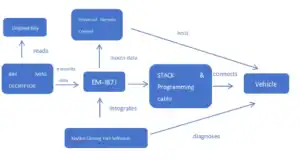
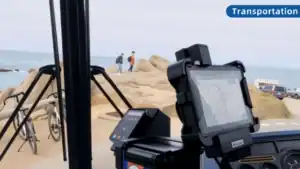
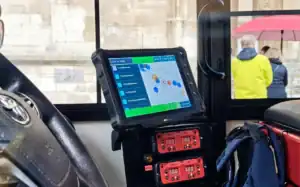
In the reported solution, the V82T provides a driver-facing control point for the tour system. Commentary can be triggered manually or by GPS. The case also describes vehicle docking, remote monitoring and centralized updates, with audio distributed through wired or wireless arrangements.
Understand the system as a chain
A useful integration model is to separate four responsibilities: selecting the correct route, recognizing a location event, choosing the matching commentary and delivering that audio to passengers. A fault in any one stage can affect the experience even when the terminal itself is working.
For this reason, the application interface should make route status and playback state easy to distinguish. A driver or authorized operator needs a clear indication of which tour is active and whether a commentary segment has already played.
Design the vehicle installation around the operator
Evaluate the mount, dock and cable routing as one installation. Check sight lines, reach and connector retention with the vehicle integrator. The preferred screen location should support the operating procedure without obstructing other controls.
Test the complete power arrangement through the vehicle’s normal operating cycle. Document how the application resumes after a restart and whether the selected route is restored. These are project acceptance questions rather than assumptions based on the terminal model name.
Validate location triggers on the real route
Build a pilot route containing adjacent points of interest, repeated road segments and areas with difficult positioning conditions. Confirm how the application handles late, missed or repeated location events. Provide an appropriate manual recovery path for authorized staff.
Test passenger audio on the chosen distribution system as well. Record the network equipment, audio endpoints and application versions that were used. Terminal capability and passenger-network capacity belong to different parts of the system and should be evaluated separately.
Make fleet maintenance repeatable
- Keep route content and application versions identifiable on each vehicle.
- Schedule updates around service availability and verify the result on a pilot vehicle.
- Maintain a documented restore procedure for a replacement terminal.
- Use operational feedback to distinguish positioning, playback and connectivity issues.
Planning an on-board computing system?
Bring your route workflow, vehicle power details and peripheral list to the configuration discussion.
Case background: the original Emdoor application story. This edition adds an Emdoor IPC integration perspective. Reported application details describe that project; new deployments require configuration and software validation.