An industrial computing deployment across multiple sites needs a configuration plan that travels with the equipment. An operator interface must connect to local machines and applications, while a vehicle terminal must fit the route, power source and network conditions in which it will work. Regional expansion adds questions about installation, software language and service ownership.
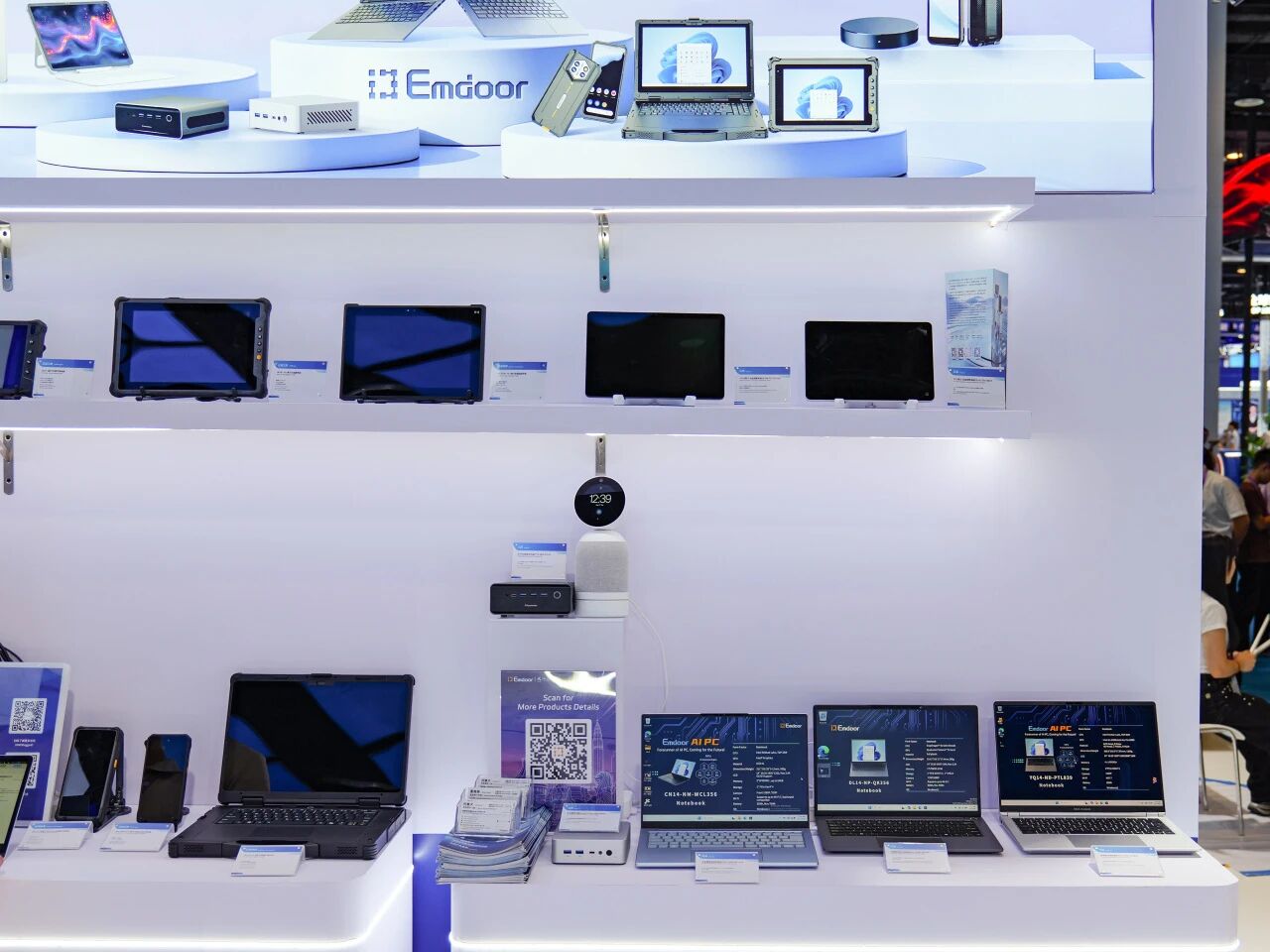
Emdoor’s report from the 23rd China-ASEAN Expo in Nanning, September 17–21, 2026, describes AI computing products, rugged terminals, vehicle computers and industrial panel PCs. The report identifies P10J for fixed industrial applications and V82T for vehicle-oriented workflows. For manufacturers and logistics integrators, these examples help start a discussion about the deployment requirements behind the product categories.
Start with the workflow at each site
| Application | Computing role to evaluate | Site evidence to collect |
|---|---|---|
| Production workstation | Fixed panel PC for instructions and job entry | Application screens, equipment interfaces and mounting drawing |
| Warehouse vehicle | Mounted task and dispatch terminal | Vehicle power details, operator position and wireless route |
| Equipment monitoring | Embedded computer or other suitable data-processing node | Signal definitions, protocols, data rate and enclosure conditions |
| AI-assisted operation | Qualified inference node with an operator interface | Model runtime, representative inputs and response targets |
Use this mapping before standardizing the entire fleet. Two sites performing the same business task may need different peripheral connections or mounting parts. Record those differences explicitly so procurement does not treat a common model name as a complete specification.
Prepare the fixed installation
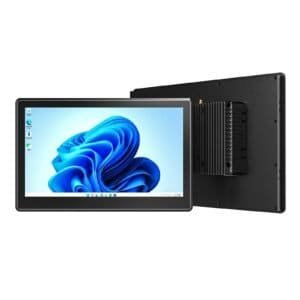
For a production station, evaluate the EM-P10J industrial panel PC against the actual application and mounting requirements. Confirm the ordered configuration and test scanners, printers and equipment connections with the intended software.
Inspect the enclosure, heat path, rear clearance and service access. Identify the power supply and restart sequence, then test an interruption during an unfinished transaction. Document whether protection claims apply to the front face or to the complete connected installation.
Validate the vehicle route
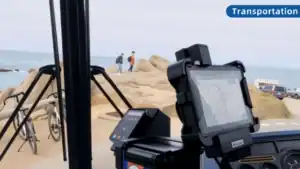
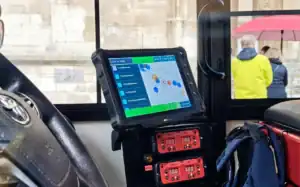
A vehicle terminal should be tested on the equipment and route where it will operate. Review bracket security, sight lines, cable retention and access for maintenance with the vehicle integrator. Confirm the power arrangement and how the application shuts down or resumes.
Survey wireless coverage using representative movement and traffic conditions. Check how a task behaves during a connection interruption and whether a repeated acknowledgment can create duplicate work. Review the vehicle PC portfolio for project-specific configuration discussions.
Make regional configuration a controlled record
Before rollout, document the language, keyboard or input method, regional time settings and application identifiers required at each site. Where a cellular option is proposed, ask for the exact module and carrier compatibility information. Request the applicable product documentation for the target market from the supplier and relevant project specialists.
Define which team owns software updates, device replacement and spare stock. Confirm who can restore the approved image and reapply peripheral settings. These arrangements need to be clear before equipment is distributed across several locations.
Pilot the complete service process
- Run representative shifts with actual users, peripherals and network conditions.
- Agree acceptance targets for transaction completion and recovery.
- Test a replacement unit using the documented configuration record.
- For AI workloads, test the selected model and runtime under sustained load.
- Record unresolved issues and assign owners before authorizing a broader rollout.
The result should be a repeatable deployment package: hardware configuration, installation drawing, software versions, tested peripherals and a support procedure. This gives each new site a known starting point while preserving the differences its workflow requires.
Explore warehouse and logistics solutions and industrial PC options. Send Emdoor IPC your site list and integration requirements to discuss a suitable configuration.
Exhibition source
Portfolio and event background: Emdoor at China-ASEAN Expo 2026. This guide adds deployment planning considerations; it does not assert that the exhibition examples have already been installed or approved for every regional project.