Android has become the dominant mobile platform worldwide — an integrated ecosystem developed by Google, encompassing OS, UI, core applications, and essential device software.
While Android’s foundation — the Android Open Source Project (AOSP) — is open and freely available, its proprietary layer, Google Mobile Services (GMS), is closed and strictly licensed. GMS delivers critical user-facing apps (e.g., Google Search, YouTube, Gmail, Maps, Play Store) and cloud-based APIs — all requiring formal authorization from Google.
Though Google apps are unavailable in mainland China, their global ubiquity remains undeniable. The Google Play Store alone hosts over one million apps, serving everyday personal and professional needs. Only devices with official GMS authorization may legally pre-install these apps and services — and enable end users to download, install, and reliably run any app from Play.
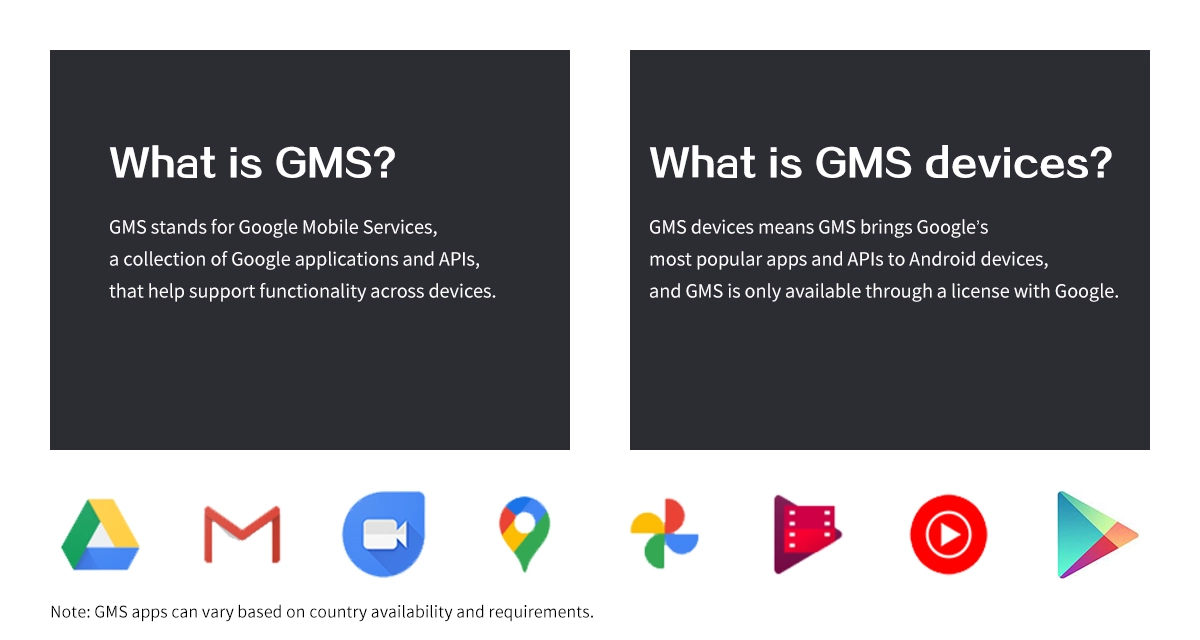
In markets like the EU and US, GMS isn’t optional — it’s foundational. Users expect seamless access to Google services, and most Android apps depend on GMS frameworks. Devices lacking GMS either fail to launch Google apps entirely or crash with errors like “stopped running,” even if manually installed.
GMS authorization is also a commercial gatekeeper: major telecom operators require it for channel approval. Without it, domestic Android device exporters cannot enter regulated overseas sales pipelines.
Google’s authorization process is rigorous. It evaluates manufacturer brand strength, software/hardware capability, shipment volume, geographic reach, and mandates passing standardized compliance tests — including CTS (Compatibility Test Suite) and VTS (Vendor Test Suite). As a result, only a small fraction of Android OEMs hold active GMS certification.
Non-authorized vendors often rely solely on AOSP — or attempt unofficial GMS integration — leading to unstable pre-installs, broken third-party app compatibility, and fragmented user experiences. These workarounds compromise reliability, security, and long-term support.
To ensure enterprise-grade usability, stability, and regulatory compliance, Emdoor Info has secured official GMS authorization across its full line of rugged Android terminals. Each authorized device integrates the complete GMS suite, displays the official Google logo, and meets Google’s strict hardware and software requirements.
The following is a list of equipment authorized by Emdoor Information through GMS:
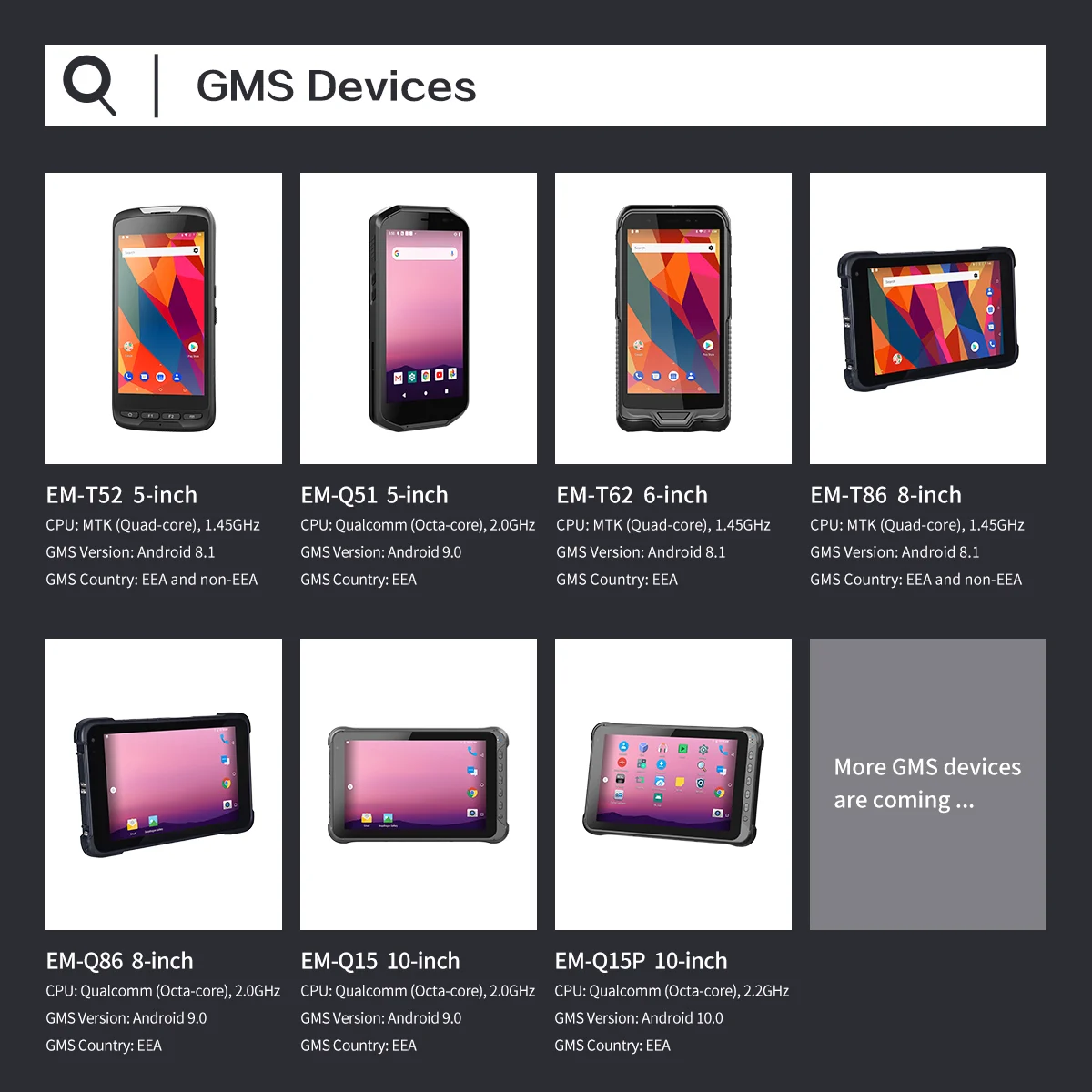
Note: The application of GMS varies depending on the country/region’s supply situation and laws and regulations. Therefore, GMS authorization is divided into different country/region versions (EEA, non-EEA, etc.).
The rugged Android terminals authorized by Emdoor Info through GMS include 3 rugged handheld terminals and 4 rugged tablet terminals.
◆Covers sizes from 5-6 inch handheld terminals to 8-10 inch tablets
◆System from Android 8.1/9.0 to the latest Android10.0
◆CPU Types from ARM Quad-core to ARM Octa-core
◆From EEA area to non-EEA area
◆Protection level from IP65 to IP67
◆From 1D/2D scanner to NFC/UHF RFID data collection
◆Positioning from GPS to Beidou
◆From 3G/4G to WiFi/Bluetooth wireless communication
Combining ruggedized hardware reliability with certified GMS compatibility, these devices serve demanding verticals — including warehousing & logistics, industrial automation, oil & gas exploration, outdoor surveying, automotive inspection, and road law enforcement.
In the future, Emdoor Info will launch additional GMS rugged android tablet models ready for immediate deployment. Furthermore, because GMS authorization requires signing Google’s MADA agreement, we offer tailored GMS certification services for brand partners without existing MADA — accelerating their entry into global markets.