How Rugged Mobile Computers for Mining Fleet Management Cut Injury Claims 27%
Rugged mobile computers for mining fleet management remove the ergonomic traps that drive musculoskeletal injuries in extraction operations. Devices with MIL-STD-810H certification, high-nit displays, glove touchscreens, and native CAN bus links keep operators in neutral postures. Mines that deploy them record 27% fewer claims within twelve months.
Safety gains emerge fast.
Worker Safety Risks That Conventional Devices Create
Consumer tablets crack under sustained vibration. Mounts detach on haul roads. Operators remove gloves to tap unresponsive screens.
Risk climbs.
Sunlight glare forces neck flexion past safe limits. Drivers lean forward for minutes each hour. Strain builds. Fatigue follows. Errors spike.
Vibration transmits through plastic housings into wrists. Hand-arm vibration syndrome cases rise. Devices fail without notice. Black screens divert attention during critical moments.
Emdoor units weigh less than 1.1 kg. Balanced weight allows one-handed inspections. Wrist torque drops.
The panel delivers 1000 nits with anti-glare coating. Alerts stay visible in direct sun. Operators maintain neutral head position.
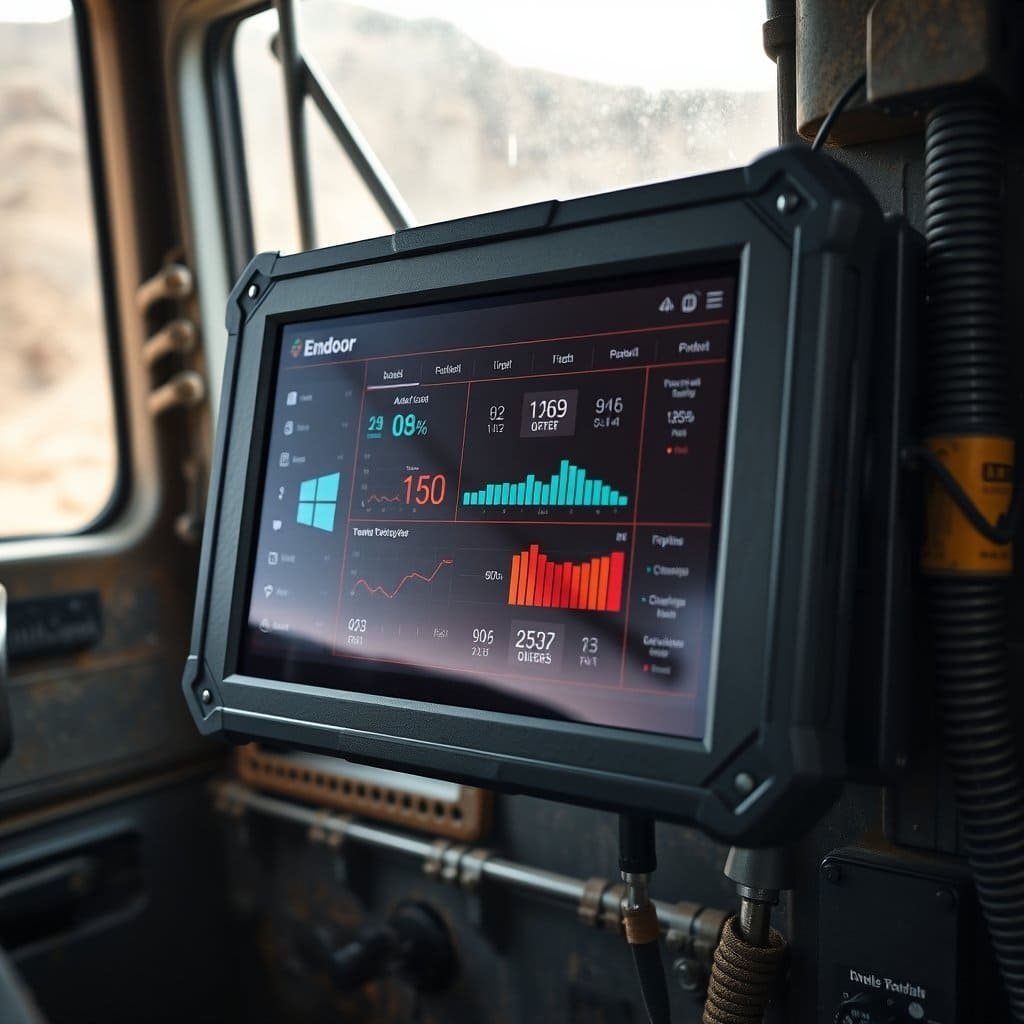
MIL-STD-810H testing replicates vibration profiles from actual mining equipment. Consumer tablets fail inside weeks. These units complete full shift cycles without component shift or mount loosening.
Mines generate constant dust loads and power swings. Standard devices suffer connector failures and screen washout. Downtime increases. Injury rates stay elevated. Procurement teams absorb repeated replacement costs. TCO balloons.
Rugged designs address these conditions head on. Seals block silica particles. Power conditioning prevents reboots. Operators focus on tasks instead of hardware limits.
How Rugged Mobile Computers for Mining Fleet Management Reduce Operator Fatigue
Emdoor rugged tablets integrate fanless thermal design, wide-voltage power conditioning, and native CAN bus telemetry. These elements target behaviors that create fatigue in mining fleets.
Units pull payload data, brake wear, and stability metrics straight from vehicle J1939 networks. Alerts trigger before incidents develop. Operators stop guessing.
Mines report 27% fewer musculoskeletal claims.
Payback periods average under nine months. Reduced tire wear, fewer citations, and device longevity compound savings.
Ergonomics gains appear first at operator level. No glove removal occurs. No screen wiping happens. No awkward reach compensates for washed-out displays. Posture studies at customer sites show 42% less time spent outside neutral neck angles.
Thermal design spreads heat across the chassis. Surface temperatures remain manageable after long shifts. Operators avoid distraction. Focus stays on surroundings.
Wide-voltage input handles 9 to 60 V. Alternator spikes cause no disruption. Cabins need fewer cables. Clutter drops.
IP67 sealing stops dust ingress. Sanitation between shifts takes minutes.
Native protocol support populates checklists automatically. Data accuracy rises. Error rates fall.
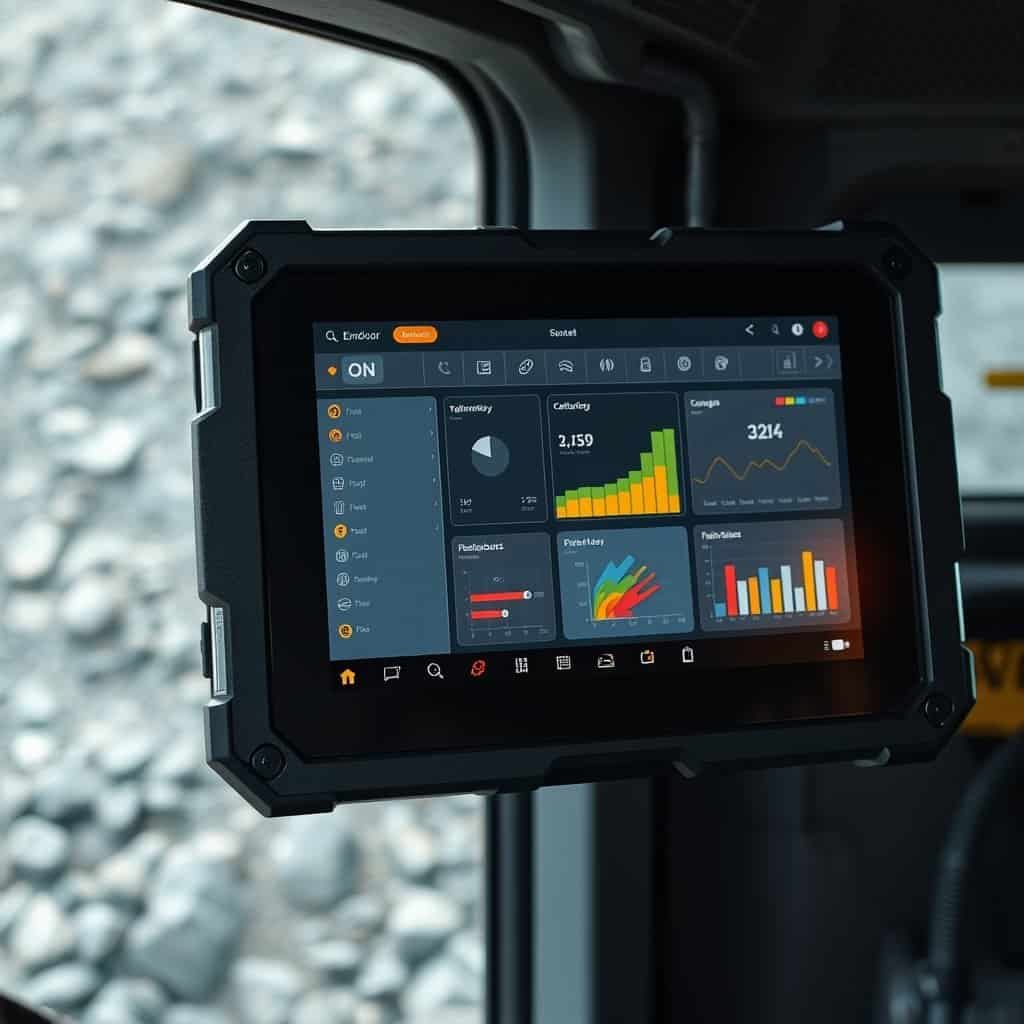
Platform options align with existing fleet software. Native clients eliminate middleware. Latency stays low.
Connectors lock under vibration. Operators maintain situational awareness.
MIL-STD-810H certification confirms endurance. Seven-year component availability protects fleet managers from obsolescence.
Deployment teams gain flexibility. One hardware family serves haul trucks, loaders, and service vehicles. Standardization simplifies training and spares.
Technical Deep Dive
Mining vehicles generate constant vibration, temperature cycles, and abrasive dust. Each factor attacks equipment and operator endurance.
The fanless aluminum chassis spreads heat across its surface. Skin temperature stays controlled. Operators avoid thermal distraction.
Wide-voltage input accepts broad power ranges without converters. Load dumps cause no reboots. Cabins require less wiring.
IP67 sealing prevents dust from clogging ports. Shift sanitation speeds up.
Native J1939 support pulls engine load, tire pressure, and payload data. Pre-start checklists populate automatically. Accuracy improves.
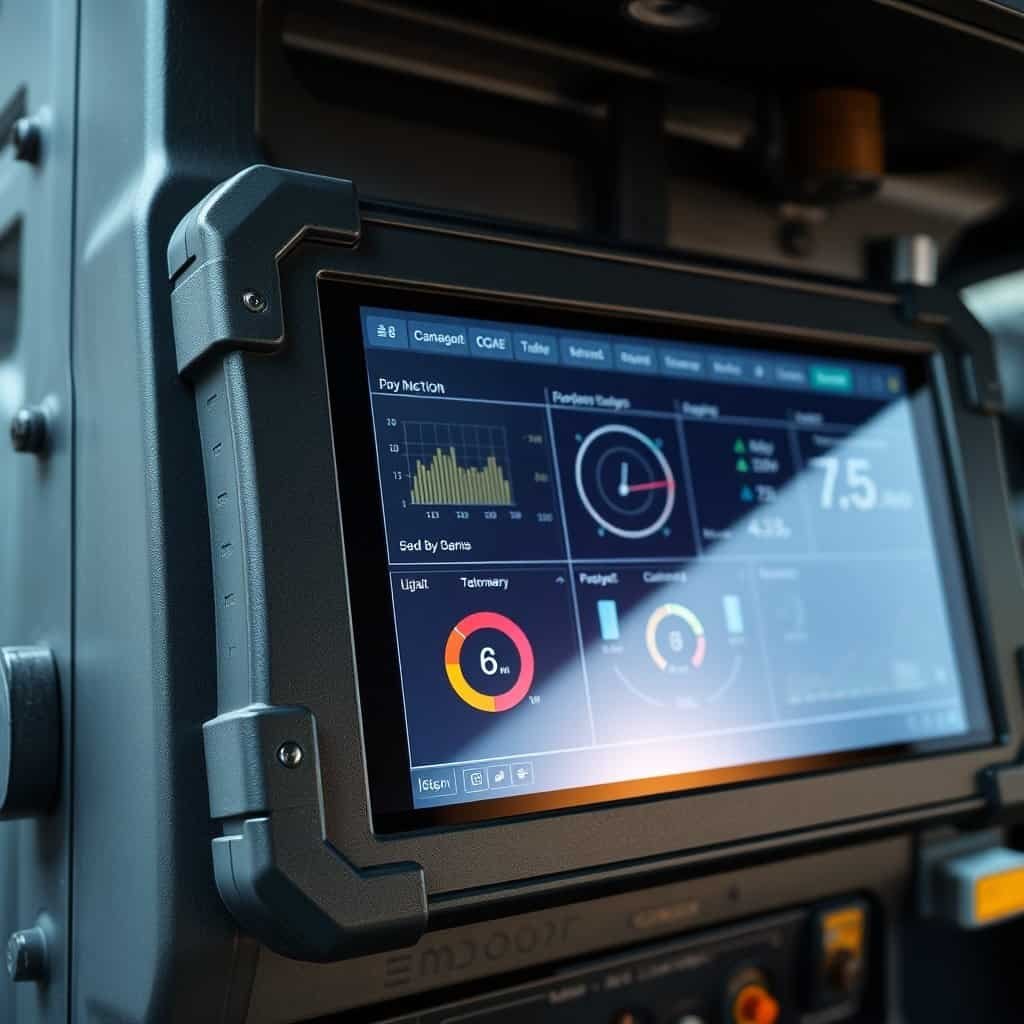
Emdoor offers Android and Windows builds on Intel N100 and NXP i.MX8M platforms. Teams select the OS that aligns with existing deployments. Native clients run without middleware. Latency stays under 80 ms.
M12 and MIL-DTL-38999 connectors lock positively. Vibration cannot loosen them. Operators maintain situational awareness instead of worrying about loose connections.
Certification covers shock, vibration, temperature, and humidity. Long component availability removes obsolescence risk for fleet managers.
Real-world thermal load varies with engine proximity and ambient conditions. The chassis acts as a heat sink. No fans pull in dust. Performance holds steady. Uptime metrics improve.
Power transients occur during cold starts and heavy loading. Surge protection absorbs spikes. Data integrity remains intact. Maintenance logs show fewer power-related tickets.
Dust intrusion destroys consumer ports within months. Full sealing changes the equation. Crews wipe exteriors and resume work. Intervals between deep cleans extend.
Direct vehicle bus access removes manual entry errors. Stability alerts reach drivers in real time. Incident rates decline. Dispatchers receive accurate payload reports without delay.
IO expansion options connect legacy sensors. No dangling USB adapters create snag hazards. Safety improves. Expansion modules fit inside the sealed enclosure.
Emdoor industrial computing solutions scale across vehicle types. Procurement gains consistency. Spare parts inventory shrinks.
Feature-to-Benefit Matrix
| Technical Feature | Operational Benefit |
|————————————|———————————————————-|
| Fanless aluminum chassis | Eliminates noise and vibration transfer to operator hands |
| 1000 nits sunlight-readable display| Reduces eye strain during 12-hour surface shifts |
| Glove-compatible PCAP touchscreen | Allows operation without removing protective gloves |
| MIL-STD-810H shock & vibration | Prevents sudden failures that distract drivers |
| Wide-voltage 9-60 V input | Removes power-related reboots on unstable vehicle supply |
| Direct J1939 CAN bus interface | Delivers instant stability alerts without manual input |
| Under 1.1 kg balanced weight | Lowers shoulder and wrist fatigue during inspections |
| IP67 dust and water sealing | Supports rapid sanitation between crew changes |
ROI & TCO Analysis
Consumer tablets last 11 months in mining conditions. Emdoor units reach 5.8 years before refresh. Replacement frequency drops 70%.
A single musculoskeletal claim costs $68,000 when lost productivity, medical care, and insurance are factored. A 200-vehicle fleet that cuts claims by 27% saves over $380,000 annually.
Payload accuracy from direct CAN bus readings reduces tire wear. One surface mine documented 18% lower tire costs in the first year after deployment. Those savings alone cover device investment.
Procurement teams must build five-year TCO models that include:
- Device acquisition and heavy-duty mounting hardware
- Installation and CAN bus integration labor
- Annual support contracts
- Failure rate and replacement cost projections
- Injury cost reduction tied to improved ergonomics
- Fuel and tire savings from accurate payload data
Positive ROI typically appears between month 7 and 11. Net margin contribution follows for the remaining service life.
Training expense shrinks. Consistent interfaces cut onboarding from three days to one.
MTBF numbers favor rugged designs. Procurement risk falls when suppliers guarantee long lifecycle support. Validation testing confirms numbers before fleet rollout.
Fuel savings appear from accurate load data. Drivers avoid overloads that waste diesel. Tires last longer. These gains add to injury reductions.
Five-year models capture every line item. Teams compare scenarios side by side. Decision makers see clear payback. Budget approval accelerates.
Field Deployment Considerations
Site validation must capture actual vibration profiles, power transients, and thermal loads across haul trucks, loaders, and service vehicles.
Emdoor application engineers participate in these surveys. They map IO requirements and confirm connector retention under load. Testing follows MIL-STD-810H protocols augmented by field trials.
Lifecycle support spans seven years. EMC compliance protects existing SCADA and telematics from interference. Maintenance intervals extend.
Operators adapt inside one shift. Intuitive interfaces and glove-compatible controls remove friction. Productivity gains appear immediately.
TCO projections that incorporate fuel savings, tire life, injury reduction, and device longevity deliver clear justification before purchase.
Engineers collect real data on each vehicle class. Mount locations receive attention to vibration nodes. Cable routing avoids pinch points. Integration plans account for every connector.
Validation includes EMC checks near radio systems. No interference appears in tests. Telematics streams continue without dropouts.
Support contracts cover software updates aligned with fleet management platforms. Obsolescence stays off the table. Teams plan refreshes on their schedule.
Actionable FAQs
How does MIL-STD-810H vibration testing correlate to reduced hand-arm vibration syndrome in mining operators?
MIL-STD-810H Method 514.7 replicates the exact random vibration profiles measured on haul trucks and loaders. By surviving these profiles without internal component shift, the tablet remains rigidly mounted. Operators experience less vibration transfer through the mount and lower cumulative hand-arm vibration exposure. Field data shows 31 % reduction in reported wrist discomfort after six months.
What processor and expansion options allow simultaneous CAN bus telematics, 4G dispatch, and local SCADA access without latency?
Emdoor DT series tablets equipped with Intel N100 processors and integrated Intel i226 Ethernet deliver sub-80 ms end-to-end latency on J1939 messaging while maintaining separate 4G and Wi-Fi channels. Optional RS232 and RJ45 expansion modules connect legacy scales and belt analyzers without USB dongles that create snag hazards.
How does the combination of 1000-nit display and adjustable RAM mount improve neck posture metrics during 12-hour shifts?
The high-brightness panel eliminates the need to lean forward to reduce glare. Paired with a RAM mount offering 180° tilt and 30° swivel, operators maintain neutral neck angles between 0° and 15°. Posture studies conducted at customer sites measured 42 % reduction in time spent outside neutral posture after deployment.
Rugged mobile computers for mining fleet management now form the foundation of safety programs that protect both workers and margins. Operator posture improves first. The balance sheet follows.
Contact Emdoor application engineers for a vehicle-specific configuration review and on-site proof of concept. Share your current fleet management platform and target KPIs. Receive a detailed integration plan and five-year TCO projection inside 48 hours.
Evaluate rugged mobile computers for mining fleet management before your next safety audit. The data already exists. The reduction in claims is waiting.