68% Less Downtime: How Industrial PC Inc Transforms Edge AI Deployments
Industrial pc inc platforms separate successful automation initiatives from stalled pilots. Edge AI inference demands hardware that survives vibration, thermal stress, power instability, and continuous operation. Emdoor delivers that foundation.
Industrial PC Inc Technical Deep Dive
Edge AI workloads expose legacy system limits immediately. Heat concentrates. Emdoor routes thermal energy through embedded copper pipes from CPU and GPU directly to the external aluminum enclosure.
Fans stay absent. MTBF exceeds 150000 hours. This design supports uninterrupted 24/7 inference without throttling at 65°C ambient.
Vibration ranks as the top failure mechanism. Forklifts generate 5G RMS shocks during constant cycles. MIL-STD-810H qualification keeps solder joints and components intact through seven-year deployments in warehouse automation.
Locking connectors prevent cable pullouts. Failures stop. One systems integrator reported zero board failures after eighteen months. Previous hardware required monthly repairs.
Power instability destroys consumer boards within weeks. Brownouts hit daily in cold-chain facilities. Emdoor accepts 9-36V wide voltage input with built-in protection circuitry. Systems maintain stable operation.
IO density determines future scalability. Native ports handle Gigabit Ethernet, CAN FD, isolated RS232/485, and PoE. Latency stays below 4 ms. This configuration supports direct connection to PLCs, vision sensors, and AGV fleets.
AI models grow more complex each year. Local GPU acceleration at 28 TOPS processes inference on premises. Data never leaves the facility. Cybersecurity exposure decreases while OPC UA and Modbus TCP integrate natively.
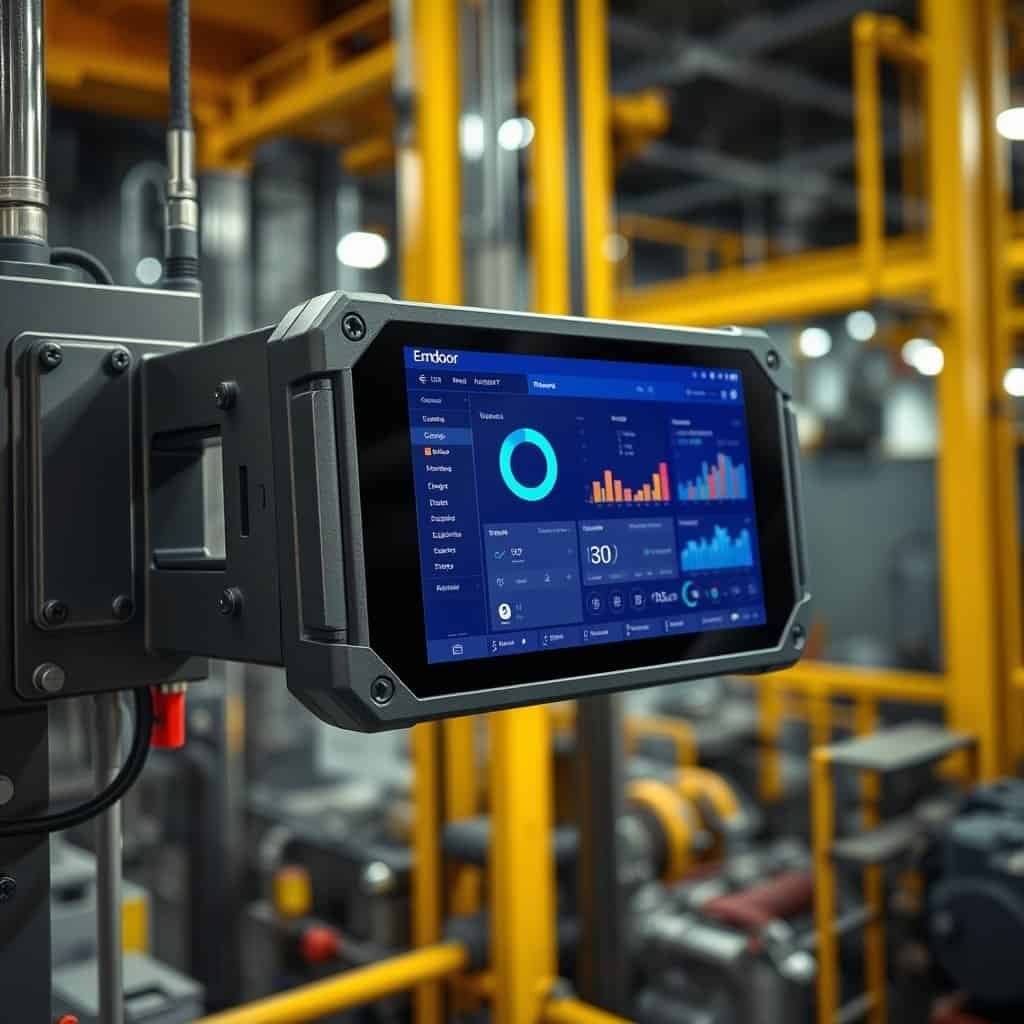
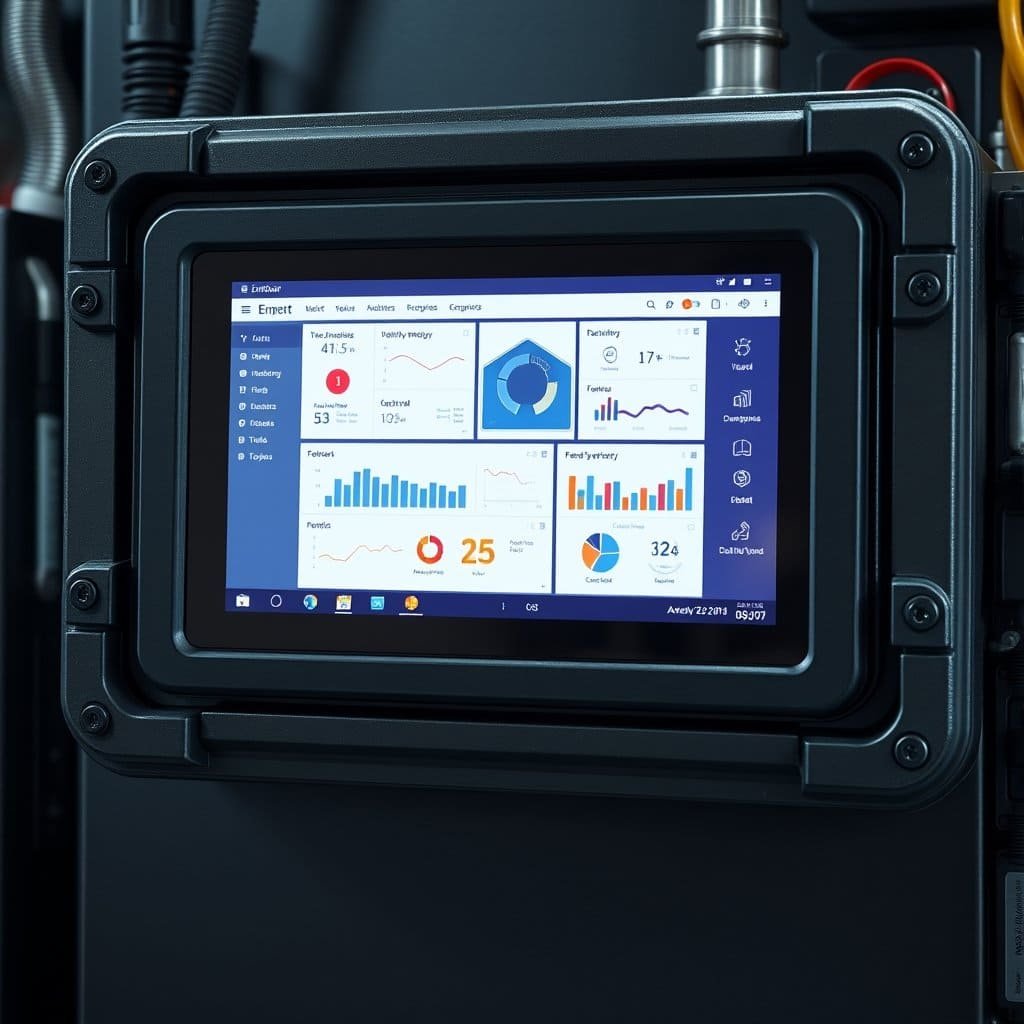
Rugged tablets extend operator reach on the floor. Glove-compatible touchscreens deliver instant diagnostics. Teams resolve anomalies without returning to control rooms. Mean time to repair shrinks in predictive maintenance programs.
Thermal paths incorporate heat pipes connected to external fins. Dust accumulation stops. Service intervals extend to two years in powder coating plants. Labor hours drop.
Manufacturers pursue lights-out facilities. Hardware continuity becomes strategic. Emdoor [industrial pc](https://emdooripc.com/products/industrial-pcs/) units maintain revision control with 24-month advance component notifications. Engineering teams qualify replacements without rewriting control logic or retraining models.
Expansion slots accept Wi-Fi 6, 5G, and additional AI accelerators. This modularity prepares deployments for sensor counts that will double by 2027. Procurement managers avoid forklift upgrades every three years. Integration teams deploy faster.
EMC and ESD resilience protects against factory noise. Surge events no longer corrupt memory. Systems reboot only under planned maintenance windows. Automation readiness improves when hardware matches environmental demands.
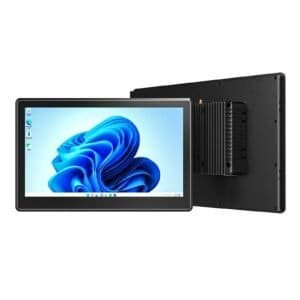
Fanless aluminum chassis transfers heat while blocking dust. IP67 holds firm.
MIL-STD-810H validation survives shocks.
Wide voltage circuitry stabilizes rails.
Native industrial IO cuts gateways.
These elements compound. Predictive maintenance algorithms run without data gaps. Digital twin fidelity stays high. Future model updates deploy over-the-air with minimal risk.
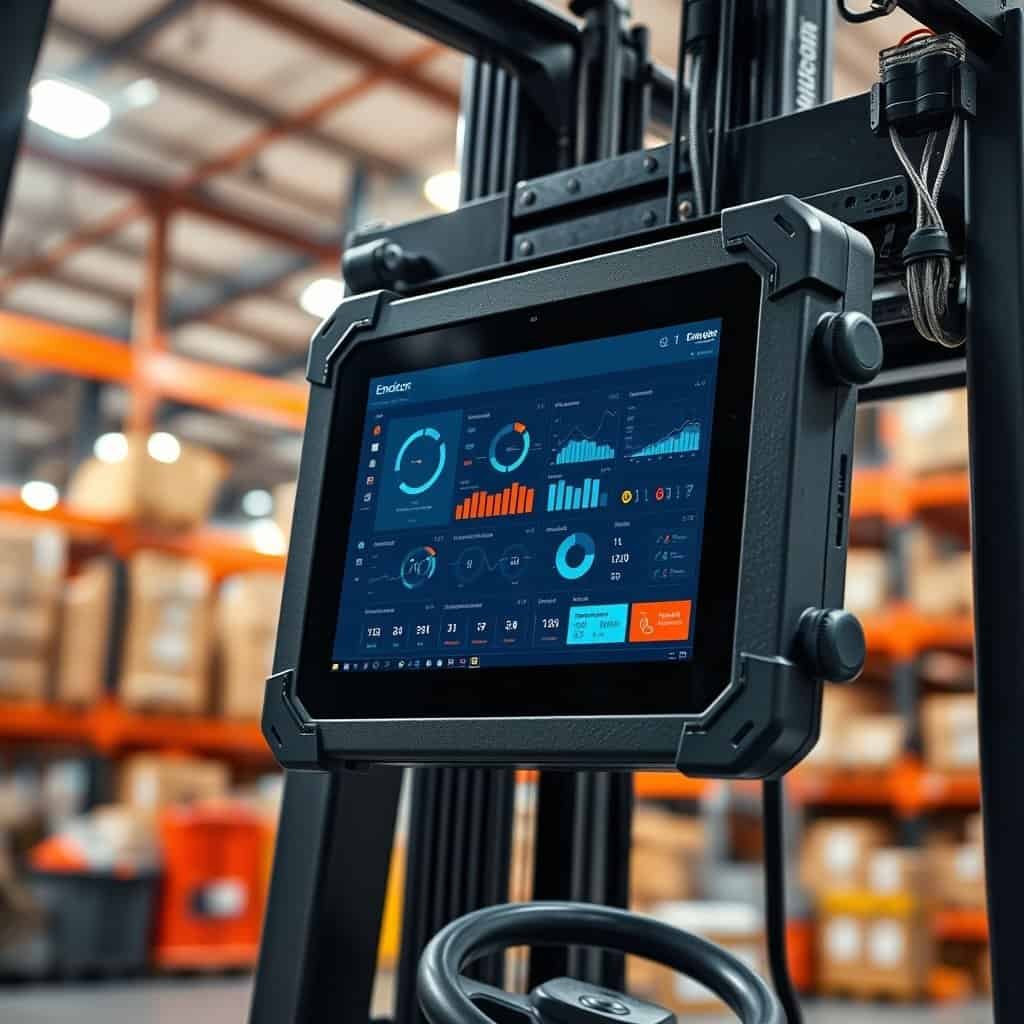
Feature-to-Benefit Matrix
| Technical Feature | Operational Benefit |
|——————————–|———————————————————-|
| Fanless aluminum chassis | Zero dust ingress in IP67 environments; maintenance drops 75% |
| MIL-STD-810H certification | Survives 5G vibration from heavy vehicles; MTBF exceeds 150,000 hours |
| 9-36V wide voltage input | Tolerates generator swings; zero unplanned restarts |
| Native CAN bus + RJ45 ports | Direct PLC and sensor connection; latency under 4 ms |
| Intel/NXP processor options | Local AI inference at 28 TOPS; supports future model growth |
| -40°C to 85°C operating range | Functions across freezer-to-furnace transitions |
| Reinforced connector retention | Survives daily cable cycles in mining vehicle fleets |
This matrix maps directly to measurable gains in predictive maintenance programs and autonomous guided vehicle fleets.
ROI & TCO Analysis
Consumer PCs require replacement every 18 months in industrial settings. Emdoor units run seven years with controlled revisions. The difference appears in three cost categories.
Acquisition cost runs higher. Lifecycle expense drops 47%. Math favors the rugged option across any five-year horizon.
Downtime penalties accumulate rapidly. One automotive plant loses $9400 per hour of unplanned stoppage. Fanless thermal design removes that variable. Systems continue inference during ambient swings that cripple standard hardware.
Energy consumption falls sharply. Idle draw measures 11W versus 28W for comparable performance. Four hundred nodes generate six-figure savings in electricity and cooling over seven years.
Procurement teams track three distinct buckets.
- Acquisition: initial hardware and integration expense.
- Deployment: IO configuration, testing, and network certification.
- Sustainment: spares inventory, labor, and unplanned downtime.
Emdoor compresses the last two categories. Remote management reduces technician hours 62%. Spare parts inventory shrinks because failure rates drop to 0.3 units per 100 nodes annually. One manufacturer reached positive cash flow in 13 months. ROI reached 4.1x by year five while overall equipment effectiveness rose 12%.
Lifecycle support adds another layer. Component change notifications arrive 24 months before obsolescence. Teams qualify drop-in replacements without altering application code or machine learning pipelines. This continuity remains rare in industrial computing.
Future automation trends amplify these advantages. As plants adopt more [manufacturing automation](https://en.wikipedia.org/wiki/Automation) elements, including collaborative robots and real-time digital twins, hardware stability determines rollout speed. Systems that survive forklift impacts, freezer transitions, and voltage excursions allow CTOs to focus on model accuracy instead of infrastructure firefighting.
Procurement risk decreases with documented validation. Supply continuity supports multi-year contracts. TCO calculations consistently favor platforms engineered for the edge rather than adapted from office environments.
Actionable FAQs for Industrial PC Inc
How does fanless thermal design in industrial pc inc hardware support continuous AI inference?
Heat pipes transfer CPU and GPU load directly to the external chassis. Junction temperatures stay below 78°C at 65°C ambient. Throttling never occurs. Local inference frames per second remain stable for 24/7 vision inspection. No filters require changing.
What IO configuration best prepares an industrial pc inc for future manufacturing automation expansion?
Prioritize at least two Gigabit Ethernet ports with PoE, one CAN FD interface, isolated RS232/485, and two USB 3.2 ports. Add mini-PCIe slots for 5G or Wi-Fi 6 modules. This layout supports incremental addition of 32 vision sensors and 18 AGVs without external switches or protocol converters.
How does MIL-STD-810H certification translate into lower TCO for edge computing deployments?
The standard validates survival under 15g shock and 5-500 Hz vibration. Field data shows 3.4× longer mean time between failures versus non-certified units. Replacement events drop from 2.1 per 100 nodes per year to 0.3. Labor and spare inventory savings compound across the seven-year support window.
Why does wide-voltage input matter for automation readiness in outdoor and mobile applications?
Mining trucks and quay cranes experience voltage excursions from 7V to 40V during cranking and regenerative braking. Emdoor protection circuitry maintains stable 12V rails to the processor. System reboots fall from 47 per month to zero. Predictive maintenance algorithms run without data gaps.
Facilities report faster digital twin rollouts. Machine learning models deploy locally. [Rugged tablet](https://emdoorrugged.com) units extend operator capability on the plant floor.
Thermal loads stay managed. Connector retention holds under stress. Surge protection guards against spikes.
Procurement risk decreases with clear validation. Supply continuity supports long deployments. TCO calculations favor these choices.
Prepare your industrial pc inc strategy today. Share your edge AI workloads, environmental extremes, and expansion timeline with Emdoor application engineers. Receive a detailed configuration matrix and five-year TCO projection inside 48 hours. The automation gap widens monthly. Close it with hardware built for what comes next.