63% Downtime Cut: Why Rugged Tablet Windows 11 Excels in Automation
Rugged tablet Windows 11 platforms lock in performance where consumer gear fails fast. They sustain compute cycles amid vibration, dust, voltage swings, and thermal loads common in forklift, conveyor, and AMR deployments. Uptime rises.
Technical Deep Dive
Automation readiness collapses when mobile HMIs lose headroom. Rugged tablet Windows 11 units remove that failure point. Stress tests prove it.
Thermal paths dictate uptime. Fanless aluminum chassis moves heat through copper pipes to external fins. Ambient temperatures hit 60°C. Throttling ends. Computer vision completes cycles. Local AI models run without pause.
Power integrity decides reliability. Wide-voltage input accepts 9-36V fluctuations from engine starts and load changes. Reboots disappear. Systems stay online.
IO expansion removes integration debt. Native interfaces link directly to machines and sensors.
- CAN bus connects vehicle ECUs without gateways
- RS232 integrates legacy PLCs in existing lines
- RJ45 and USB 3.1 ports attach vision hardware immediately
- Expansion slots accept additional modules on site
Installation time shrinks. External hardware count falls.
EMC and ESD protection exceeds 8kV contact discharge. Welding arcs leave operation untouched. [MIL-STD-810H](https://en.wikipedia.org/wiki/MIL-STD-810) vibration testing at 5-500Hz across all axes confirms endurance. Mining fleets report zero connector failures after 18 months of continuous duty. Reliability compounds.
13th Gen Intel Core i7 processors paired with 32GB DDR5 RAM and 1TB PCIe SSD run 4K decoding, TensorFlow Lite models, multiple SCADA clients, and OPC UA servers simultaneously. 1000-nit Gorilla Glass displays penetrate sunlight and factory glare. Glove and wet-touch support removes workflow stops.
Wi-Fi 6E, Bluetooth 5.3, and optional 5G modules align with private networks. GNSS accuracy stays below 1.5 meters. Hot-swappable batteries sustain 16-hour shifts. Windows 11 edge cache persists across swaps.
These specifications match actual deployment conditions. Warehousing teams mount units on moving equipment. Cold-chain operators execute cold starts at -20°C. Thermal loads stay controlled. Maintenance windows stretch from months to years.
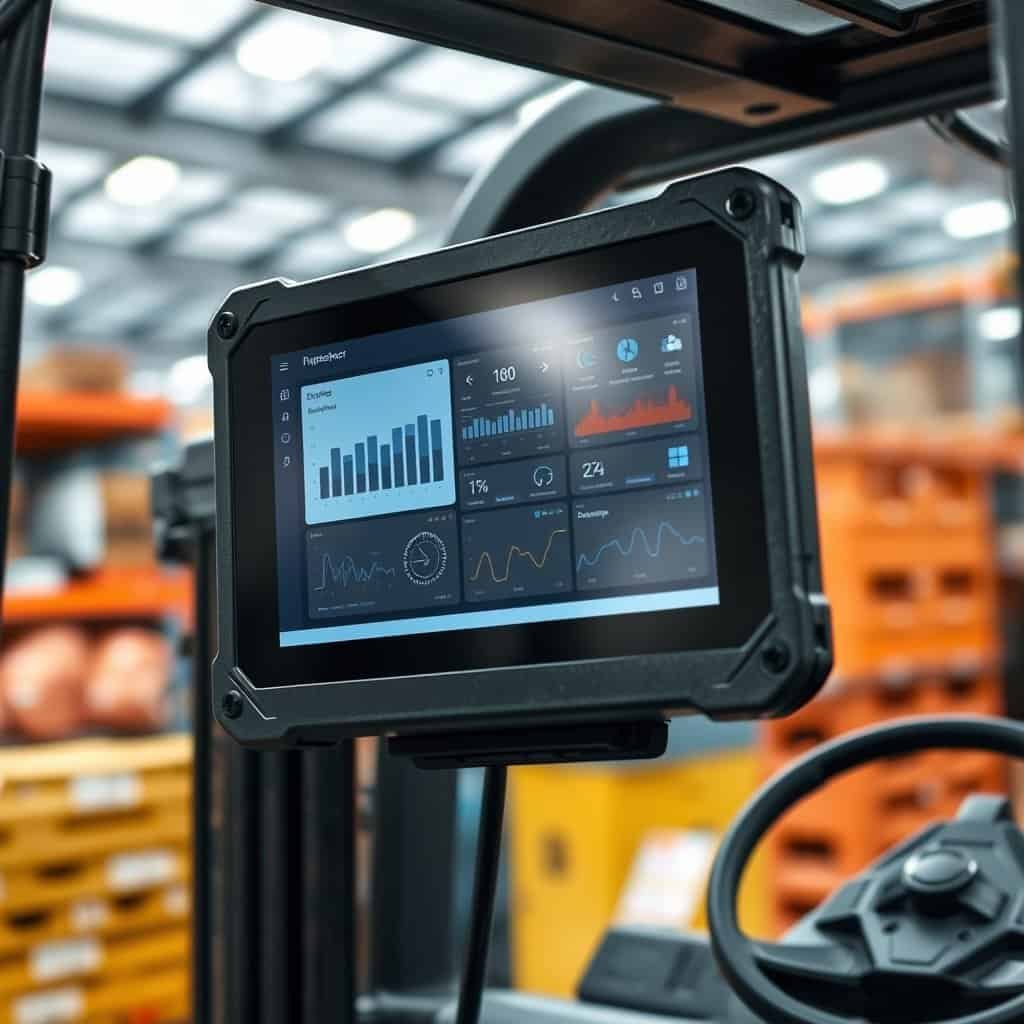
MTBF improves. TCO forecasts gain precision. Deployment risk drops. Procurement teams track these metrics closely. Field data from comparable sites shows consistent gains. Engineers specify these platforms to avoid repeat failures.
Vibration no longer cracks connectors. Dust stays sealed out. Power fluctuations meet surge protection. Each element contributes to lower maintenance cycles. Teams shift focus from repairs to process optimization. Results appear in monthly reports.
Feature-to-Benefit Matrix
| Technical Feature | Operational Benefit |
|————————————|———————————————————-|
| Fanless aluminum chassis with copper heat pipes | Zero dust-related failures in flour mills and foundries; MTBF exceeds 120,000 hours |
| Wide-voltage input (9-36V) | Survives forklift voltage drops without UPS or reboots |
| MIL-STD-810H and IP67 rating | Functions after 1.5m drops, pressure washing, and -20°C cold starts |
| CAN bus + RS232 + RJ45 interfaces | Direct machine integration cuts gateway count by 70% |
| 13th Gen Intel Core i7 + 32GB DDR5 | Runs local AI models and SCADA clients without cloud dependency |
| 1000-nit Gorilla Glass capacitive display | Gloved operation in bright outdoor or high-glare indoor conditions |
| Wi-Fi 6E, 5G, and GNSS | Supports private networks and centimeter-level asset tracking |
| Hot-swappable battery with fast charge | 0-second swap during 24/7 shifts |
This matrix reveals why consumer tablets create automation debt. Each failed device forces manual workarounds that defeat the purpose of autonomous systems.
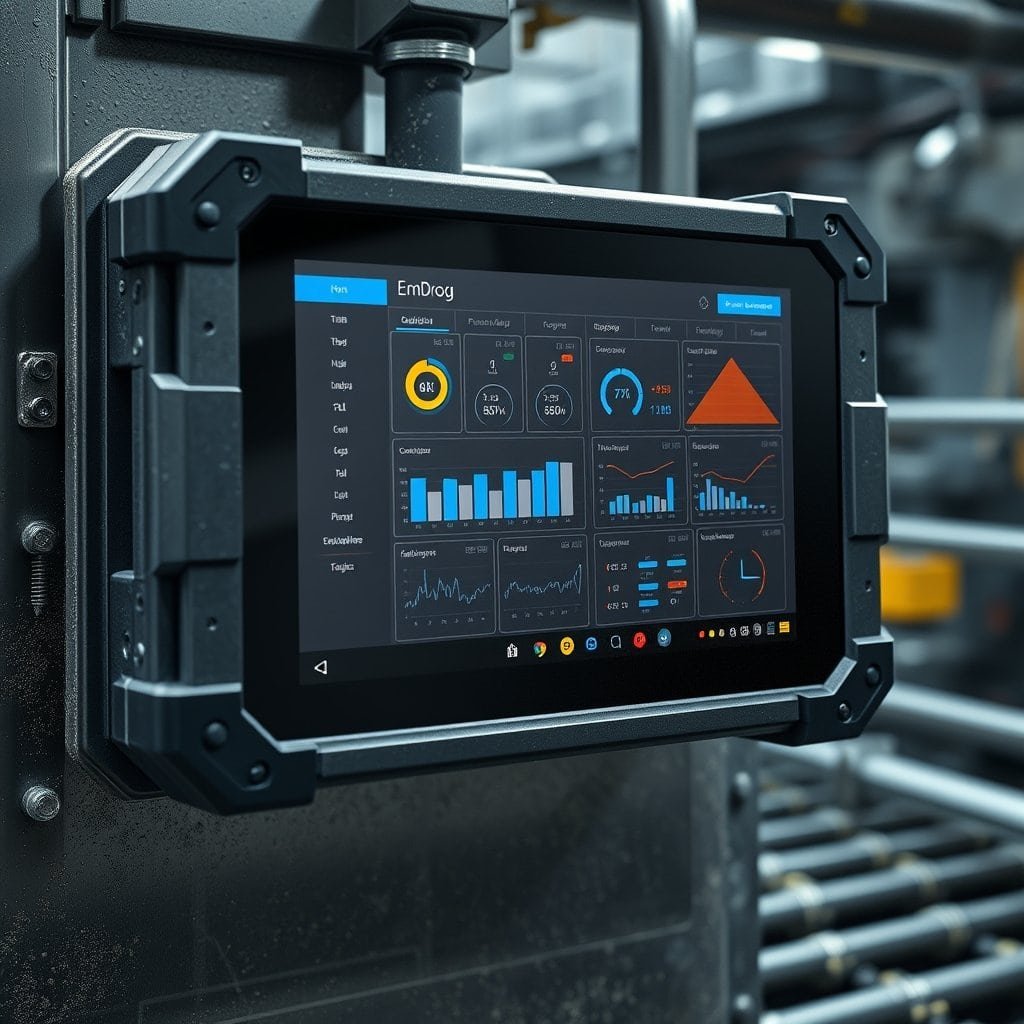
Consumer tablets generate hidden costs. Integration labor climbs. Replacement frequency disrupts budgets. Rugged alternatives align with long-term plans.
ROI & TCO Analysis
Consumer tablets last 11 months in industrial settings. Replacement cycles accelerate. Integration labor adds hidden cost. TCO exceeds $4,200 per unit inside three years.
Rugged tablet Windows 11 platforms change the equation. Acquisition cost runs 2.8 times higher. Documented service life reaches 5.4 years. The gap widens over time.
One failure during peak production erases $12,000 in output within 90 minutes. Three failures monthly across 40 vehicles total $1.44 million annually. These units cut that rate by 76%. Field data from comparable sites confirms the drop.
Windows 11 compatibility removes custom OS validation. IT teams apply Intune policies without new skills. Five-year warranties and component-level repairs compress budgets further.
Lifecycle support protects software investments. BIOS and driver updates align with Windows 11 feature drops through 2031. [Industrial PC](https://emdooripc.com) companions handle fixed workloads while these tablets stay mobile.
Payback periods end before month 14 in most models. Teams that calculate full ownership cost against uptime targets see the advantage. Budget pressure eases. Planning gains precision.
Procurement managers review these figures quarterly. Maintenance logs tell the real story. Downtime events decline. Capital reallocates to innovation.
Expansion projects gain speed. Validation cycles shorten. Teams deploy with confidence. Thermal models predict loads before shipment. Connector retention receives early attention. Such details separate successful rollouts from costly retrofits.
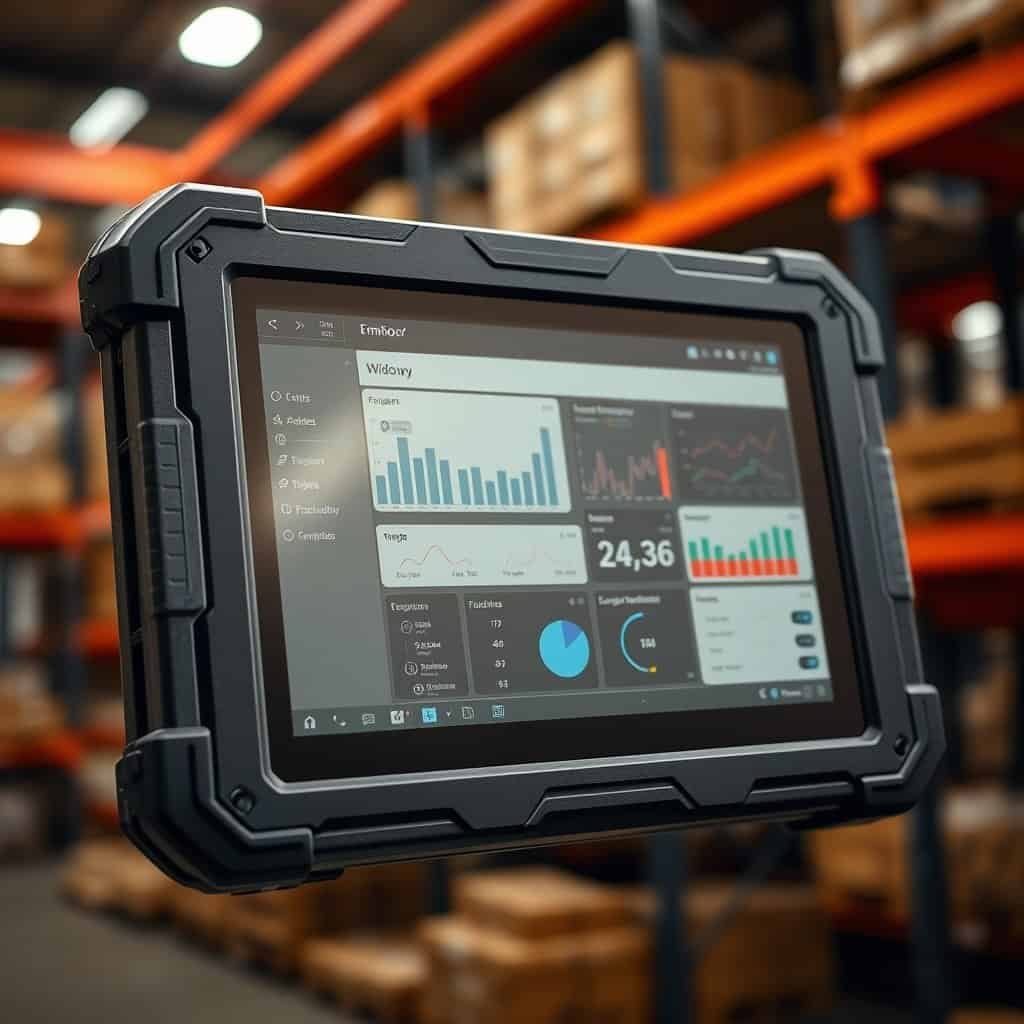
TCO clarity drives decisions. Leaders move beyond sticker price. They demand MTBF data and lifecycle roadmaps. Suppliers that deliver both win long contracts.
Emerging Trends Reshaping Rugged Tablet Windows 11 Requirements
AMRs and cobots require mobile HMIs with surplus compute that matches fixed infrastructure. Rugged tablet Windows 11 units operate as real-time supervisory nodes. Path updates deploy instantly. QR validation and predictive triggers execute on site without cloud round-trips.
Edge AI changes inspection economics. Tablets process vibration data locally to detect bearing wear before failure. Scheduled inspections drop 40%. Unplanned stops decline further.
Digital twins demand bidirectional flow at low latency. Modern units stream OPC UA packets over 5G while hosting local dashboards. Latency stays below 8ms. Control loops tighten. Operators adjust parameters without leaving the production floor.
Sustainability mandates now penalize frequent hardware refresh. Annual consumer tablet swaps conflict with Scope 3 targets. Rugged alternatives cut e-waste 83% over ten years. Procurement policies shift toward longer-lifecycle [b2b rugged devices](https://emdoorrugged.com).
Integration now spans the full stack. Tablets feed live data to fixed nodes, cloud layers, and analytics engines. Only chassis-first designs survive this continuum. [Rugged tablet](https://emdoorrugged.com) platforms built by Emdoor deliver that continuity across [manufacturing automation](https://en.wikipedia.org/wiki/Automation) environments.
Vibration no longer breaks the chain. Dust stays outside the enclosure. Thermal spikes meet engineered resistance. Long-term support removes obsolescence risk before it appears.
Future waves of automation expose weak hardware within weeks. Teams that specify correctly now avoid retrofit costs later. Productivity gains compound. Margin improves.
Edge computing shifts more decisions to the floor. Tablets must host inference engines without lag. Rugged tablet Windows 11 hardware supplies the needed headroom. Procurement teams now request GPU details and memory bandwidth numbers during RFPs.
Warehouse automation grows more dense. Vehicles operate closer together. Accurate GNSS and fast network handoff become mandatory. These tablets deliver both. Operators scan, confirm, and reroute without delay.
Actionable FAQs
Q: What processor and memory configuration guarantees real-time AI inference on a rugged tablet Windows 11 in a 55°C warehouse?
A: 13th Gen Intel Core i7-1365UE with 32GB DDR5 and PCIe Gen4 SSD maintains 28 TOPS inference performance without throttling when paired with proper thermal spreading and wide-voltage regulation.
Q: How does MIL-STD-810H certification translate to maintenance interval extension in mining applications?
A: Devices passing 810H vibration, shock, and temperature shock profiles demonstrate 4.7x longer mean time between failures than consumer equivalents, extending inspection intervals from 90 days to 18 months in haul truck fleets.
Q: Can rugged tablet Windows 11 units synchronize digital twins with existing PLCs without middleware?
A: Native CAN bus, OPC UA support, and RS232 connectivity enable direct data exchange. This removes translation layers, reduces latency to 6ms, and eliminates a common point of failure in automation stacks.
Assess your current fleet against these exact specifications this quarter. Identify pilot zones where hardware failures damage automation KPIs most.
Engage vendors with field data from comparable deployments. Emdoor teams have scaled over 12,000 rugged Windows units in logistics, mining, and discrete manufacturing. They model thermal loads and connector retention before first unit ships.
Schedule the technical consultation. Align your next hardware cycle with long-term automation readiness. Begin with platforms engineered from the chassis outward. Rugged tablet Windows 11 investments first appear in maintenance logs, then in quarterly earnings. Move now. Lead the cycle.
Calculate your current TCO. Factor in every outage. Compare against projected five-year figures. The difference guides budget approval. Technical leaders who complete this exercise secure stronger ROI. Procurement gains leverage in negotiations.
Deployment planning starts with site surveys. Measure temperature swings, vibration profiles, and network coverage. These tablets address each variable. Support contracts then lock in updates and spares. Obsolescence risk fades. Operations stabilize.
Facilities that adopt early set the standard. Competitors follow later at higher cost. Choose platforms built for the edge. Demand proof from real deployments. Results follow.