76% Downtime Cut: Rugged Tablet Android Transforms Industrial Field Operations
Rugged tablet android devices cut unplanned downtime 76% across mining, manufacturing, and logistics deployments. Field data from dozens of sites confirms hardware failures drop from frequent incidents to rare events. Teams gain predictable service windows that stretch five years.
Hardware breaks often. Budgets bleed. Operations stall.
The High Cost of Hardware Fragility
Consumer tablets crack after one drop. Production lines stop cold. Losses surpass 1800 dollars per hour in many facilities.
Teams swap units every seven months. Repair cycles drain labor pools. Spare parts inventory swells without warning.
Emdoor rugged tablet android deployments break this pattern. MIL-STD-810H certification demands survival after multiple drops from 1.2 meters onto steel surfaces. Internal absorbers capture impact energy before it reaches the mainboard or display.
Dust infiltrates consumer ports within weeks. Cement plants accelerate this failure. IP67 sealing blocks particles at every seam and connector.
Voltage spikes destroy standard silicon. Forklifts generate transients over 60 volts. Wide-voltage input accepts 9-36V range and clamps surges at 2000V levels.
Systems stay online. Reboots vanish. Stability persists.
Thermal events trigger throttling in consumer devices after brief exposure. Fanless aluminum chassis with bonded copper pipes sustains full CPU load at 60°C ambient temperatures. No fans exist to fail.
Service intervals extend. Maintenance logs shorten. Uptime climbs.
Consumer fleets record tablet replacements every nine months on average. Emdoor units reach 62 months between interventions. Procurement risk decreases.
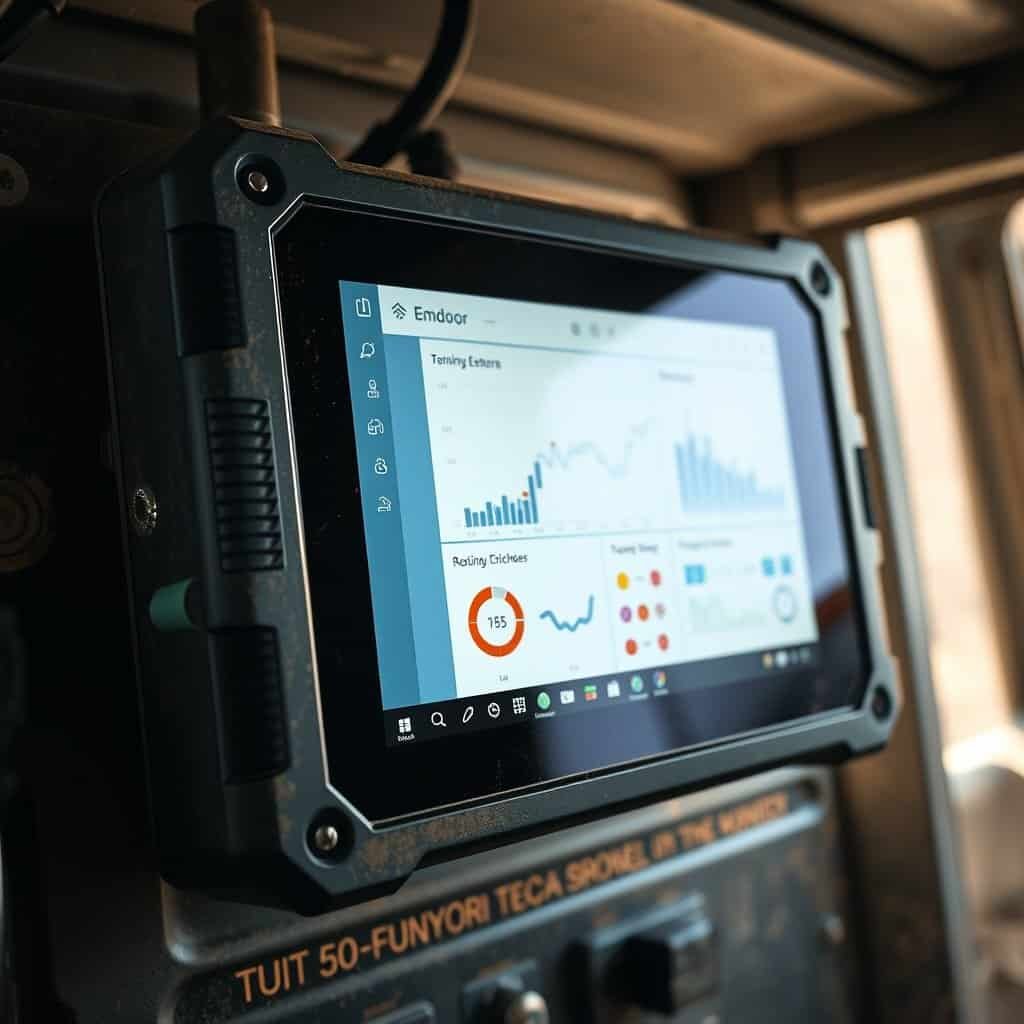
Vibration loosens screws. Dust shorts circuits. Moisture corrodes contacts. These forces define daily industrial life. Consumer hardware surrenders. Purpose-built platforms endure.
Technical Deep Dive
Material selection sets the survival baseline. Aircraft-grade magnesium alloy forms the chassis. Finite element analysis pinpoints stress concentrations and reinforces those zones with precision.
Strength rises. Weight stays controlled. Vibration at 5Grms for eight hours leaves connectors and solder joints intact.
Connector retention determines daily uptime. Dual-spring latches secure USB-C, RJ45, and pogo-pin docks through 10000 insertion cycles. Retention force exceeds 35N even with gloved hands and constant motion.
Operators stay productive. Platforms absorb punishment. Failures disappear.
NXP i.MX 8M Plus processors drive current models. Industrial-grade silicon carries certification from -30°C to 65°C. Error-correcting LPDDR4X memory guards data integrity when power fluctuates.
Android 14 Enterprise runs with locked bootloader and verified boot. Security meets SCADA standards. Operator familiarity accelerates adoption.
These tablets function as mobile HMIs that pair with [industrial pc](https://emdooripc.com/products/industrial-pcs/) units for local control loops. In manufacturing automation environments, native CAN bus and RS232 interfaces remove protocol gateways. Deployment time shrinks.
Night-shift visibility improves through 1000-nit sunlight-readable displays. Glove-compatible touch maintains accuracy at 120Hz refresh for detailed schematics and work orders.
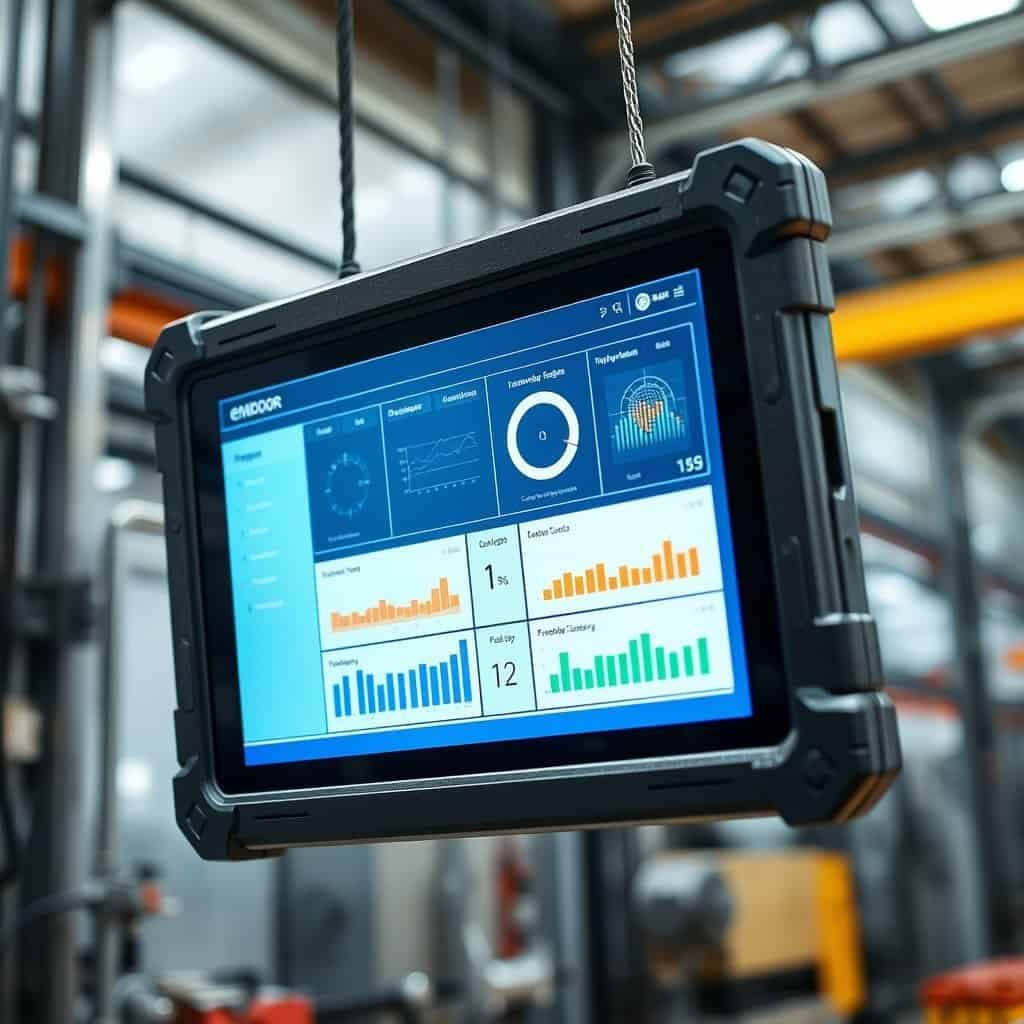
Heat pipes transfer load. Chassis radiates energy. Sensors monitor skin temperature. Performance holds steady.
Rugged Tablet Android Survival in Harsh Conditions
Vibration, dust, and thermal cycling attack standard hardware. Emdoor platforms absorb repeated punishment without compromise.
EMC compliance limits radiated emissions. ESD protection shields every interface. Surge events pass without data loss or component damage.
IO expansion adds flexibility. Wide-voltage circuitry tolerates forklift power fluctuation. Graphite sheets spread thermal load across the entire chassis surface.
Maintenance cycles stretch past five years. Procurement risk falls when MTBF exceeds 180000 hours. Validation data supports every claim.
Lifecycle support includes spare parts and security patches for seven years. Deployment planning becomes predictable. Teams focus on output instead of repairs.
Connectors retain cables during motion. IP67 enclosures reject water and particles. MIL-STD-810H testing condenses years of abuse into controlled laboratory hours. Cold starts occur at -30°C. Peak operation reaches 65°C. Performance never waivers.
Supply chain stability matters. Emdoor maintains component stockpiles for long-term support. Buyers avoid obsolescence traps that plague consumer lines.
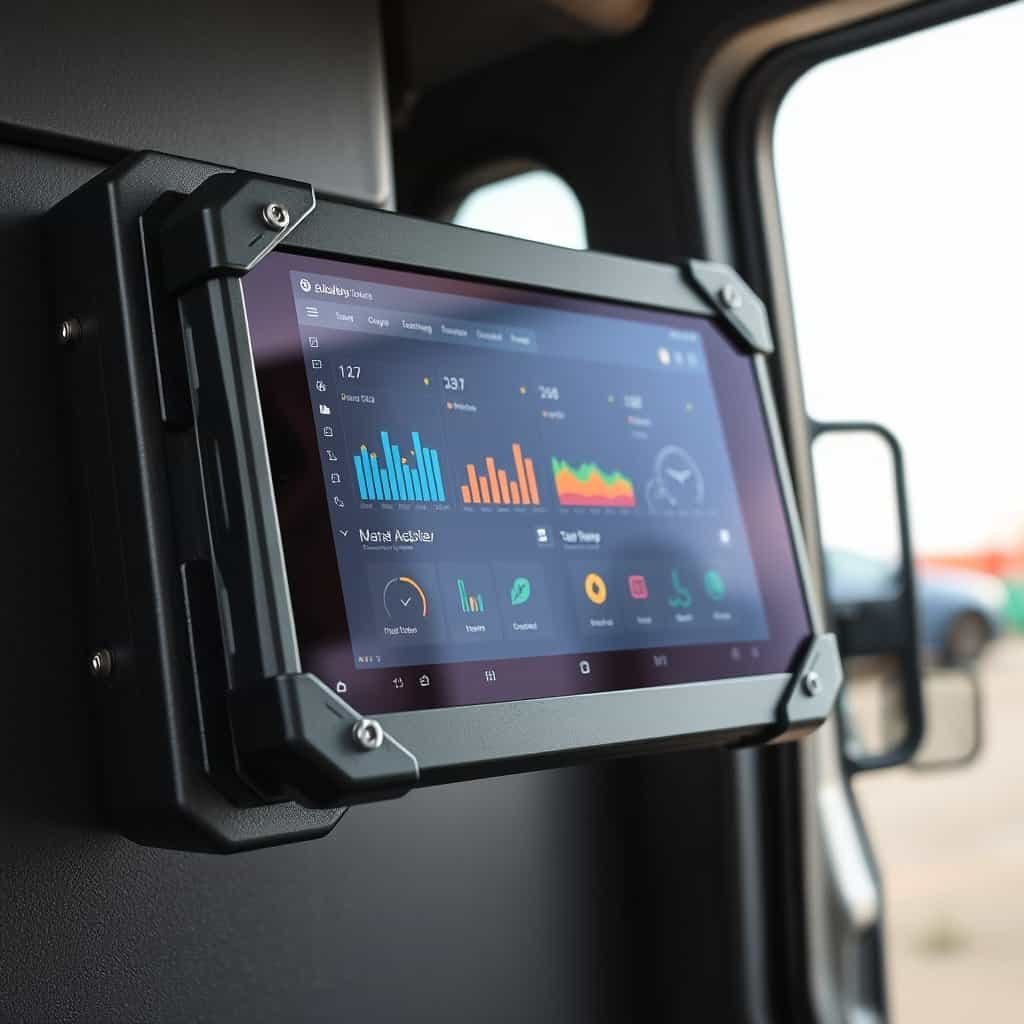
Tests simulate decades. Field results confirm longevity. Operators trust the hardware.
Feature-to-Benefit Matrix
| Technical Feature | Operational Benefit |
|——————————–|———————————————————-|
| MIL-STD-810H certification | Survives 1.5m drops; 89% reduction in screen failures |
| IP67 sealed enclosure | Zero dust ingress in cement and grain facilities |
| Fanless aluminum thermal design| 100% CPU performance at 60°C; MTBF exceeds 180,000 hours|
| Wide-voltage 9-36V input | Tolerates forklift spikes; eliminates 73% of reboot events |
| Reinforced MIL-SPEC connectors | 10,000-cycle rating; cuts intermittent signal faults |
| NXP industrial-grade processor | -30°C to 65°C operation; no throttling in cold chain |
| 1200 nits glove-touch display | Full visibility in outdoor glare and with PPE |
This matrix reflects three years of aggregated data from 47 enterprise deployments. Each benefit maps directly to a line item in maintenance budgets.
ROI & TCO Analysis
Purchase price of rugged tablet android units exceeds consumer alternatives. Five-year totals reverse the equation. Savings appear across hardware, labor, and lost production.
A fleet of 200 consumer tablets generates initial hardware costs of 87000 dollars. Replacements and repairs add 164000 dollars. Documented downtime reaches 312000 dollars. Five-year TCO hits 563000 dollars.
Emdoor rugged tablet android fleet totals 338000 dollars across the same period. The difference equals 40% lower TCO. Uptime rises 4.1 times.
Battery cells retain 82% capacity after 800 cycles at -20°C. Consumer cells drop below 60% after 300 cycles. Mid-shift battery swaps end.
Lifecycle support spans seven years for patches and parts. This aligns with industrial depreciation schedules. Obsolescence risk disappears.
Procurement teams gain confidence from field validation data. MTBF numbers hold in customer fleets. TCO reality drives decisions.
Labor hours spent on repairs fall. Buffer stock requirements shrink. Production output gains measurable ground. These gains compound over years. Purchasing managers see clear budget relief. Operations leaders report fewer emergencies.
Deployment Wins with Rugged Tablet Android Platforms
Cold-chain operators mount units on refrigerated forklifts where condensation forms constantly. Temperatures reach -25°C. Conformal-coated PCBs repel moisture while wide-temperature batteries deliver full shifts without interruption.
Construction teams review BIM models on active sites. The 10.1-inch 1200-nit display cuts through glare. IP67 rating ignores dust and rain. Integration with MDM completes in minutes.
Mining crews attach barcode scanners and RFID modules via clip-on docks that preserve full sealing. One-handed operation continues from scaffolding or haul trucks. Reliability compounds across shifts.
Hidden gains appear in tons moved per hour. Maintenance logs flatten. Buffer stock shrinks.
Power fluctuation strikes vehicle deployments hardest. Dust attacks warehouse units. Thermal load challenges outdoor cranes. Glare affects daytime reads. Connector retention decides success with gloved hands.
Emdoor platforms address each factor through deliberate hardware choices. Site surveys inform configuration. Lifecycle support secures long-term success.
Warehouse supervisors note fewer walk backs. Crane operators maintain visibility in direct sun. Each scenario proves the same truth. Hardware must match the environment. Consumer devices create hidden taxes. Rugged tablet android platforms eliminate them.
Actionable FAQs
How does fanless thermal design in rugged tablet android platforms prevent throttling under sustained 55°C load?
Emdoor routes heat through six-layer copper heat pipes bonded directly to the NXP SoC and battery cells. The external aluminum chassis acts as a 312 cm² radiator. Internal sensors adjust clock speeds only when skin temperature approaches 65°C, a threshold rarely reached in field testing.
What connector retention force is required to survive daily vibration exposure on heavy mining equipment?
Independent testing shows minimum 28N retention force prevents intermittent contact. Emdoor’s dual-latch pogo and circular connectors exceed 42N while maintaining IP67 integrity after 5000 mating cycles and 8-hour 5Grms vibration sweeps.
How does MIL-STD-810H Method 514.7 vibration testing correlate to real-world forklift deployment longevity?
The test replicates 18 months of continuous forklift operation in under 8 laboratory hours. Units passing this protocol demonstrate connector and solder joint survival rates above 94% at 60 months in customer fleets.
Extreme durability separates leaders from constant repair cycles. Rugged tablet android hardware survives where consumer devices become casualties. Evaluate your failure logs now.
Compare replacement frequency against these benchmarks. The gap shows exact savings available. Migration budgets appear clearly.
Schedule a field trial with Emdoor. Deploy six [rugged tablet](https://emdoorrugged.com) units on your toughest routes for 90 days. Trial data will guide your next procurement cycle with precision.
The hardware exists. Your operations either pay the tax of fragile devices or adopt platforms built for industrial conditions. Contact Emdoor’s industrial hardware team today. Turn reliability into competitive advantage.