4.2x Lower TCO: How Industrial PC Manufacturers Secure 2026 Automation Wins
Industrial pc manufacturers face intense pressure to deliver hardware that survives dust, vibration, and power swings. Emdoor fanless designs with isolated cores cut five-year TCO by 4.2 times while holding sub-4 ms latency across vision, historian, and inference loads. Readiness for 2026 starts here.
Hidden Risks for Industrial PC Manufacturers
Legacy platforms collapse fast. Dust blocks fans. Throttling destroys output.
One automotive line logged 27 stops in a single quarter. Commercial Ethernet ports shook loose under AGV vibration. Failures mounted.
Humidity corrodes contacts. Brownouts reset controllers. Cold-chain warehouses see these events daily. Mining vehicles and outdoor logistics yards face repeated cycles.
Procurement teams chase lowest price. Field failures surface months later. Costs explode.
Fan-cooled boards ingest particulates within 30 days. Consumer connectors loosen at 4 g rms. Standard Ethernet drops packets above 55 °C. UPS units add failure points inside crowded panels.
IP67 enclosures stop ingress cold. Direct-soldered M12 ports replace fragile modules. Aluminum heat pipes route 65 W without moving parts. MTBF exceeds 180000 hours in 24/7 duty.
Emdoor platforms address these risks at the silicon level. Wide-voltage input tolerates 9–36 V swings. Supercapacitors bridge 200 ms gaps. No external UPS enters the cabinet.
Plants report 41 percent lower five-year costs after standardization. Deterministic latency stays below 4 ms with full vision stacks active. Headroom remains.
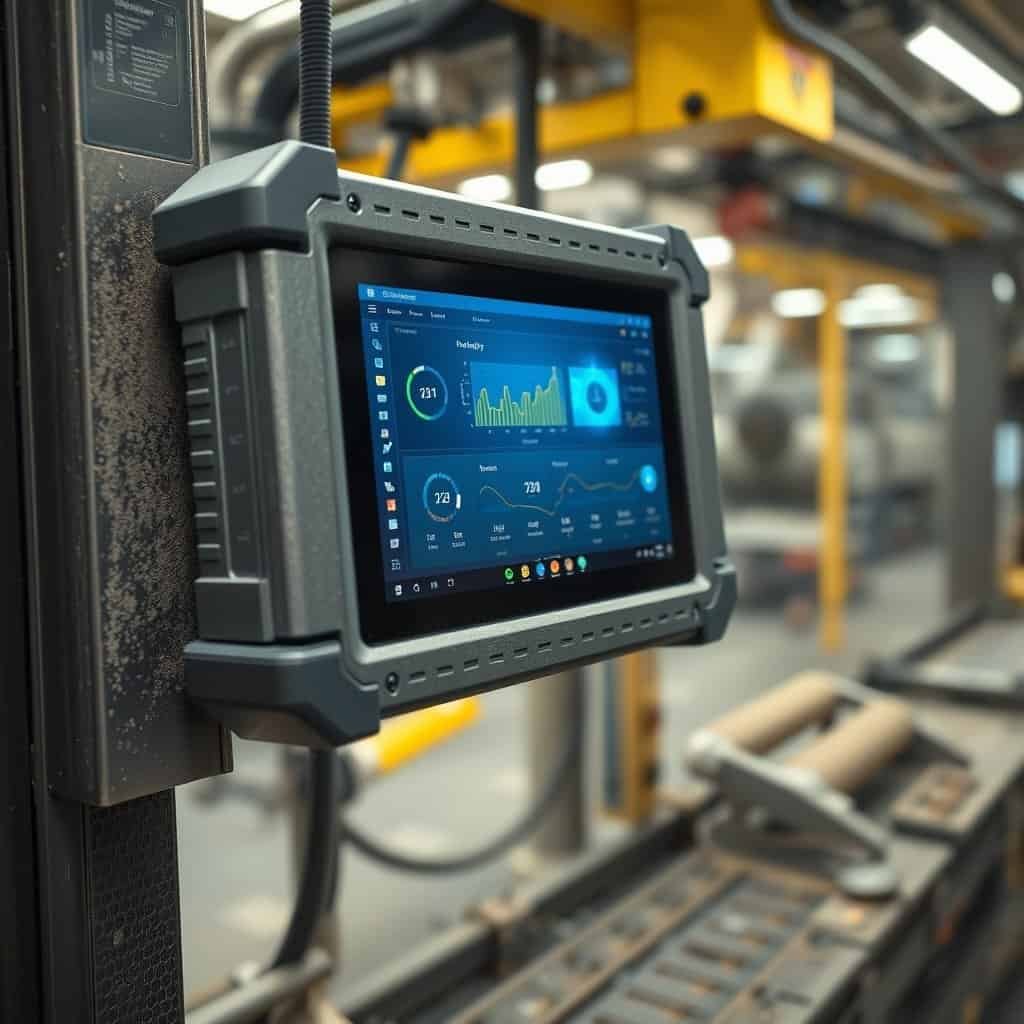
Edge AI demands sustained capacity. NXP and Intel silicon reserves 40 percent margin after PLC and historian loads engage. Connector retention follows MIL-STD-810H shock profiles. M12 ports survive 15 g rms for eight hours. Forklifts stay connected after repeated drops.
Vibration profiles vary by site. Thermal load spikes during peak shifts. Maintenance cycles stretch budgets. Procurement risk grows when suppliers lack roadmap transparency. Industrial pc manufacturers that ignore these factors lose bids. Emdoor builds for real deployment conditions instead of lab sheets.
Warehouse logistics adds another layer. AGVs generate constant shake. Dust infiltrates every seam. Power fluctuates when chargers engage. Systems must deliver unified management between fixed nodes and mobile units. Otherwise training costs rise and spares proliferate.
Technical Deep Dive
Isolated cores change system architecture. Cortex-M runs safety logic. Cortex-A hosts inference containers. Deterministic behavior survives peak vision traffic.
Wide voltage input spans 9–36 V. Internal buffering covers 200 ms outages. Cabinet depth shrinks 40 mm. No extra hardware required.
Thermal paths use heat pipes only. Air exchange drops to zero. Dust accumulation ends. Maintenance schedules lose quarterly filter tasks.
One mining operator cut scheduled service 73 percent. Teams now focus on process lines. OEE rises.
Native interfaces arrive pre-certified. Four CAN FD ports, 10 GbE, and isolated serial links support motion control and legacy equipment. Integration time shrinks from months to weeks.
Emdoor shares one management plane with mobile units. Operators configure fixed nodes through glove-compatible rugged tablet interfaces. APIs align across families. [Industrial pc](https://emdooripc.com) platforms link seamlessly to [b2b rugged devices](https://emdoorpc.com).
EMC and ESD resilience is built in. Surge protection guards against welding spikes common in brownfield plants. Power quality varies by shift. Protection matters.
Real-time cores keep jitter under 2 ms. GPU acceleration offloads inference. Plants run 30 fps quality checks without disturbing robot synchronization.
TSN readiness appears in next-generation silicon. 5G slicing creates dedicated paths for critical traffic. Edge nodes now deliver server-grade performance inside the same harsh environment as the PLC. These capabilities directly prepare industrial pc manufacturers for 2026 [manufacturing automation](https://en.wikipedia.org/wiki/Automation) mandates.
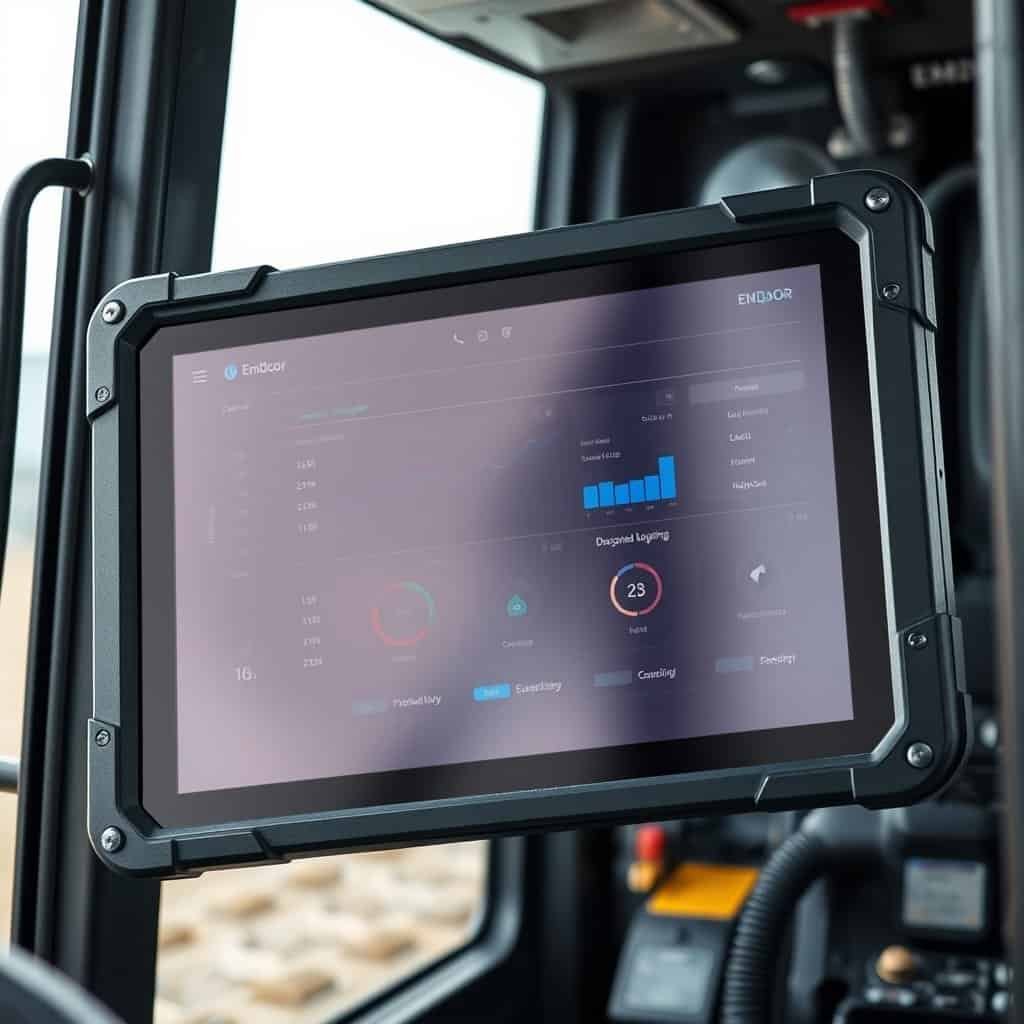
IO expansion slots accept additional modules without custom carriers. Wide-temperature components operate from minus 20 °C to 65 °C. Surge protection circuits clamp transients in microseconds. Connector retention force exceeds standard specs by three times. These details decide uptime in logistics yards and vehicle mount applications.
Supply chain stability separates leaders from followers. Emdoor publishes clear roadmaps with 24-month notices. Procurement teams avoid last-minute obsolescence spikes. Validation reports arrive with each platform. Deployment planning becomes predictable instead of reactive.
Feature-to-Benefit Matrix
<table>
<thead>
<tr>
<th>Technical Feature</th>
<th>Operational Benefit</th>
</tr>
</thead>
<tbody>
<tr>
<td><strong>Fanless Aluminum Chassis with heat pipes</strong></td>
<td>Eliminates dust-related failures; zero maintenance for 7+ years in IP67 zones</td>
</tr>
<tr>
<td><strong>MIL-STD-810H & IP67 rating</strong></td>
<td>Survives 5 ft drops, 2000 m altitude, and 95% humidity on mining vehicles</td>
</tr>
<tr>
<td><strong>9-36 V wide input with supercap buffering</strong></td>
<td>Tolerates power instability; removes UPS cost and failure points</td>
</tr>
<tr>
<td><strong>Native CAN FD + 10 GbE + isolated serial</strong></td>
<td>Deterministic <4 ms latency for motion control and robotics synchronization</td>
</tr>
<tr>
<td><strong>NXP i.MX8M Plus or Intel 13th Gen with AI acceleration</strong></td>
<td>Simultaneous inference and real-time control with 40% headroom for 2027 workloads</td>
</tr>
<tr>
<td><strong>Remote out-of-band management via 4G/5G module</strong></td>
<td>Firmware updates and health monitoring without network access to OT domain</td>
</tr>
</tbody>
</table>
ROI & TCO Analysis
Consumer-grade systems last 31 months in harsh conditions. Emdoor platforms reach 96 months under identical stress. The gap compounds.
A 120-unit deployment shows clear math.
- Consumer hardware refreshes and downtime costs hit $701,000 over seven years
- Emdoor path totals $284,000
- Net reduction reaches 4.2 times
Maintenance labor shrinks. Technicians spend 14 hours monthly on resets and cleaning for standard units. Rugged equivalents drop that effort to 90 minutes. Seven-year savings equal two full-time roles.
Component availability guarantees remove budget surprises. Emdoor publishes roadmaps with 24-month last-time-buy notices. Procurement risk falls. Unplanned capital requests disappear.
Power fluctuation tolerance cuts another line item. No separate UPS units means fewer failure points and less battery replacement cycles. Cabinet space opens for additional IO modules.
Lifecycle support extends beyond initial sale. Validation reports and deployment planning arrive upfront. System integrators close projects faster when hardware performs as specified across temperature and vibration profiles.
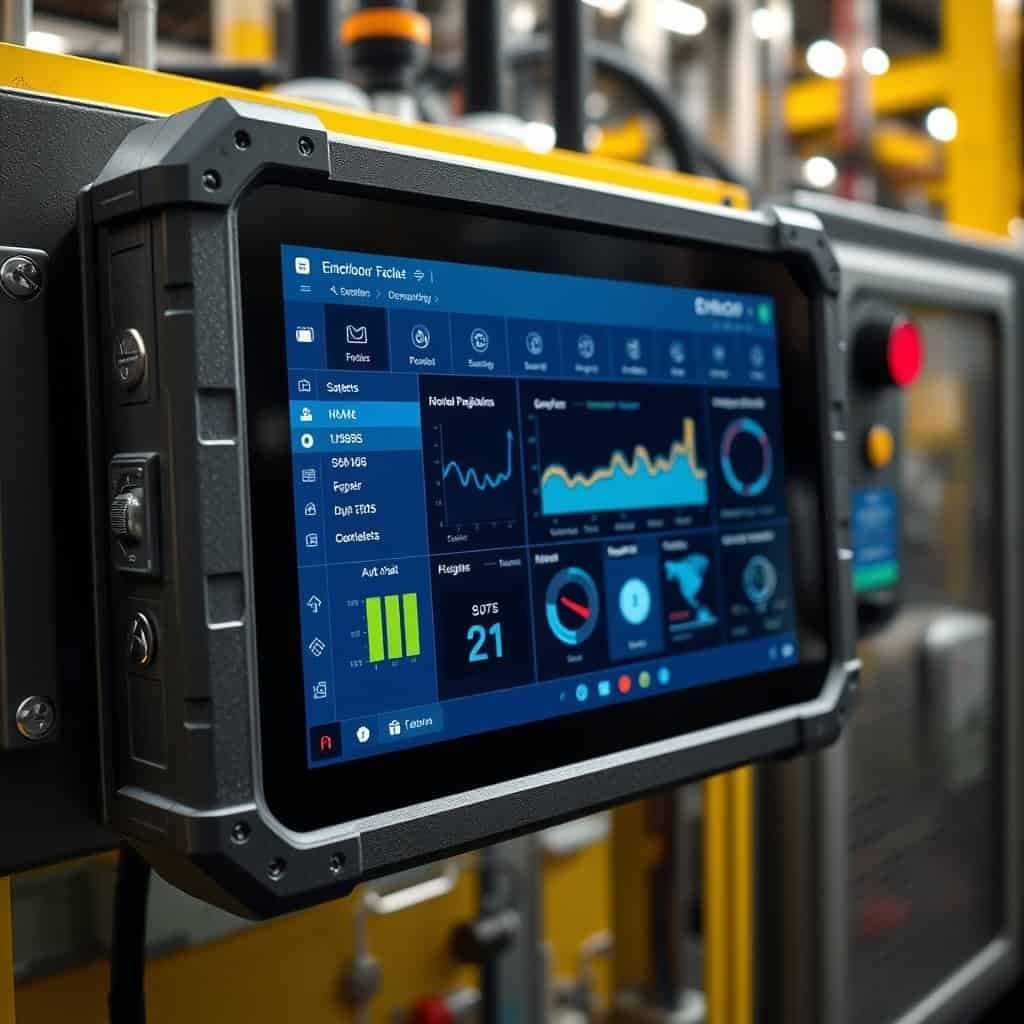
TCO calculations must include every variable. Downtime minutes cost thousands per hour in automotive lines. Spare parts inventory ties up capital. Training for multiple management tools wastes hours. Emdoor unifies the stack so operators move between fixed and mobile assets without relearning commands. Savings accrue quietly over years. Procurement managers notice the difference at renewal time.
Future Trends Impacting Industrial PC Manufacturers
5G private networks converge with vision systems. 30 fps inference runs locally while autonomous robots share network slices. Only isolated-core designs maintain determinism under these loads.
Digital twins require sub-10 ms state synchronization. Computing moves onto the shop floor beside the machine. Server-room racks give way to edge nodes rated for dust and shock.
Warehousing sites adopt AMRs at scale. These vehicles generate constant vibration and demand unified APIs between fixed industrial pc nodes and mobile tablets. Spare-parts strategy simplifies.
OEM projects need IO expansion without custom carriers. Wide-temperature operation from –20 °C to 65 °C becomes table stakes. Surge protection and connector retention decide field success rates.
Emdoor qualifies next-generation silicon for TSN and 5G SA. Remote out-of-band management works even when OT networks stay air-gapped. Firmware rolls out across 200 units in minutes instead of hours.
Procurement managers now score suppliers on lifecycle support. MTBF data alone fails to satisfy. They demand proof of sustained performance in real vibration and thermal cycles before volume commitment.
Industrial pc manufacturers that treat hardware as disposable will lose the automation race. Platforms chosen today set OEE numbers in 2027. Future-proof designs protect uptime and shrink support overhead.
Actionable FAQs
What CPU and acceleration options deliver real-time AI for robotics without violating cycle times?
Emdoor offers NXP i.MX8M Plus with dedicated neural processing unit or Intel 13th Gen with UHD graphics supporting OpenVINO. Both maintain <2 ms jitter on safety cores while running concurrent inference models.
How does wide-voltage design plus supercapacitor protection improve system availability?
The 9-36 V input combined with 200 ms hold-up time bridges 87% of recorded industrial power events. Plants eliminate separate UPS hardware that itself fails at 22% annual rate in harsh conditions.
What lifecycle and management features reduce TCO for fleets exceeding 200 units?
Emdoor guarantees 7-year component availability, publishes quarterly health reports via out-of-band 4G, and offers API-driven fleet management. Average firmware update time across 200 units drops from 14 hours to 43 minutes.
Evaluate your installed base now. Match current systems against 2026 requirements. Industrial pc manufacturers ready to lead must schedule a 30-minute technical consultation. Emdoor application engineers review your environment and shortlist platforms still supported when transformation hits full scale. Contact us today.