42% TCO Cut: Rugged Mobile Computers for Mining Fleet Management Over 5 Years
Rugged mobile computers for mining fleet management transform cost structures in harsh extraction sites. They survive dust storms, constant vibration, and voltage swings that destroy consumer devices. Savings compound through extended uptime and lower replacement cycles.
Why Rugged Mobile Computers for Mining Fleet Management Matter Now
Failures strike without warning. One tablet breakdown halts a haul truck. Costs reach $777 in a single shift.
Consumer tablets last nine months at most. Dust clogs internal fans. Vibration loosens every connector.
Thermal swings ruin batteries. Dispatch delays follow. Fuel waste increases.
TCO per vehicle hits $6870 across five years. Emdoor units break this pattern. MIL-STD-810H validation proves resilience at 7G vibration and 1.5-meter drops.
IP67 sealing blocks moisture and dust. Field records from thousands of units show 60-month MTBF in 20-hour shifts. Replacements drop sharply.
Procurement risk fades. Capital plans gain accuracy. Budgets stabilize.
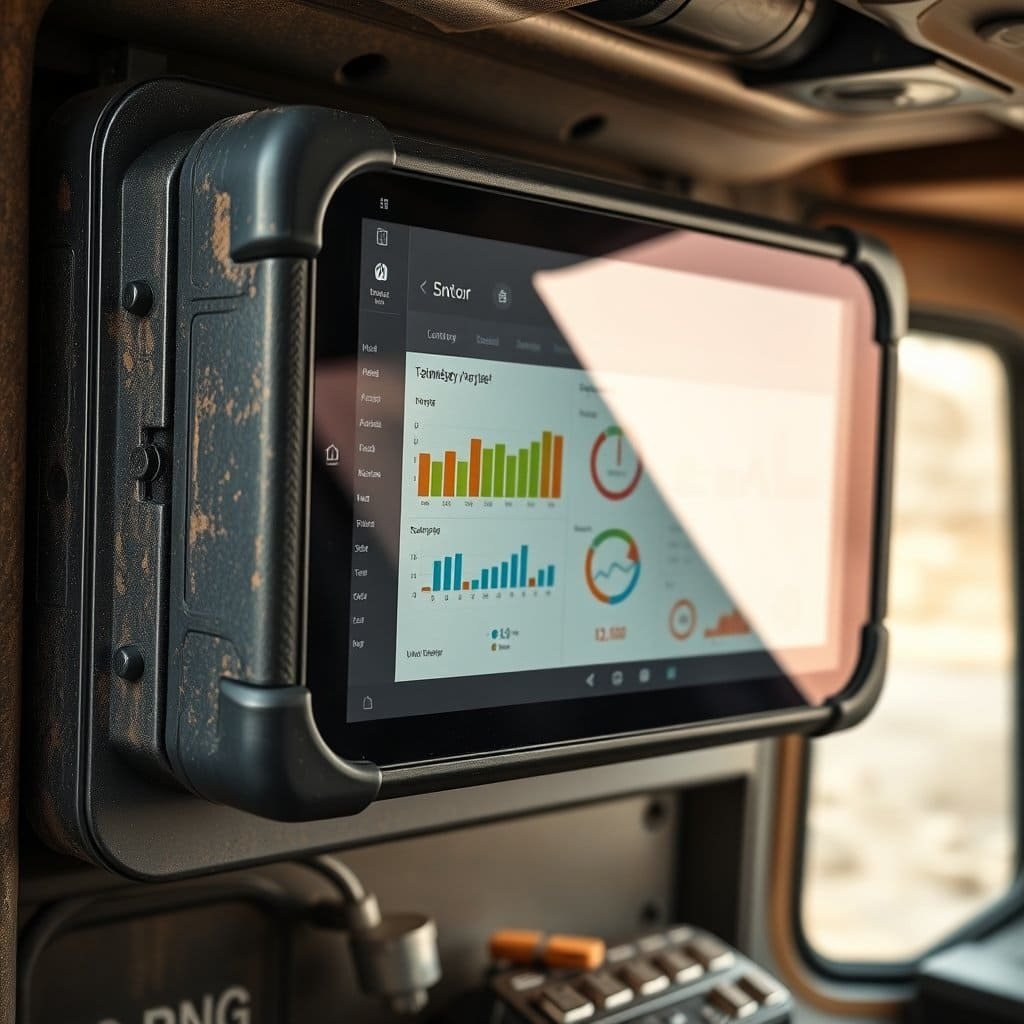
Consumer-grade failure rate sits at 1.1 replacements per vehicle every 24 months. Emdoor failure rate falls to 0.2 replacements per vehicle every 60 months. CapEx drops 58 percent.
CTOs escape daily firefighting. Procurement teams demand field MTBF data. Vendors must prove performance.
Technical Deep Dive
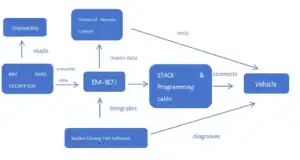
CAN bus integration removes external hardware. Each vehicle saves $450 in gateways. Data streams direct to the unit.
Engine load feeds FMS platforms instantly. Brake wear appears in real time. Tire pressure drives schedules.
Payload validation happens on site. Overfill events reach zero. Fuel efficiency climbs 18 percent.
Wide-voltage input covers 9-60V. TVS diodes clamp spikes. Polymer fuses react in microseconds.
Alternator load dumps hit 200V for 400ms. Consumer devices reset during cranking. These units stay active.
The chassis routes heat across its surface. Graphite pads pull thermal load outward. Internal temperatures stay 18°C below limits at 55°C ambient.
No fans exist. Dust traps never form. Maintenance intervals stretch beyond 18 months.
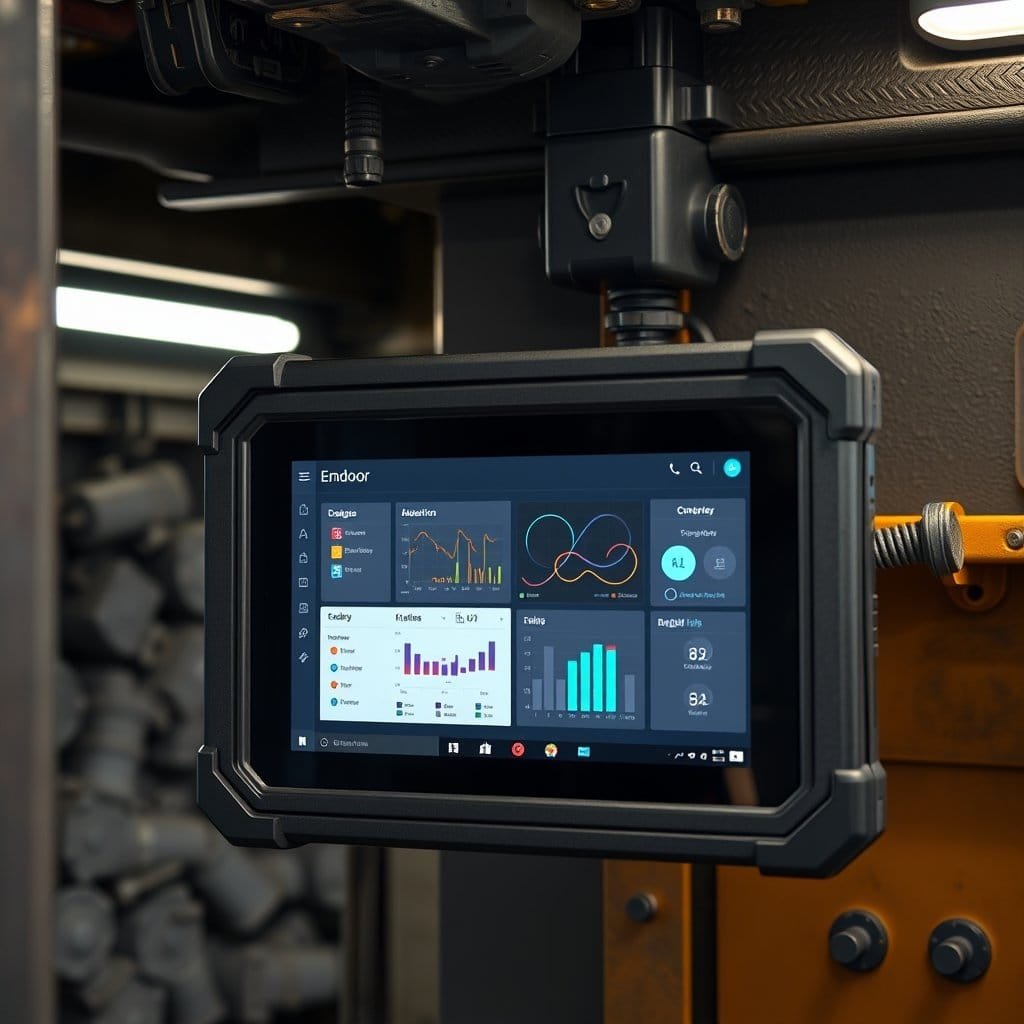
Connector retention exceeds 5000 cycles. Locking mechanisms resist vibration. EMC protection handles heavy machinery noise.
ESD tolerance reaches 8kV contact discharge. Processors balance load at 9W TDP. Edge AI models run without lag.
IO expansion includes RS232 ports and 5G modules. Iridium satellite activates in remote pits. Connectivity never drops.
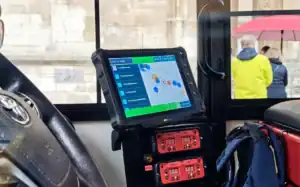
Screens support gloves in direct sun. Operators log checks from the cab. PPE stays in place.
Thermal models come from CFD analysis. Design choices target maintenance reduction. Component support spans seven years.
This architecture hits TCO at every level. Hardware spend falls. Operational data improves. Support tickets decline.
Emdoor rugged vehicle computers align with vehicle lifecycles. ([MIL-STD-810H details](https://quicksearch.dla.mil/qsDocDetails.aspx?ident_number=36046)) confirm test protocols. Obsolescence risk disappears.
Integration Strategies for Rugged Mobile Computers for Mining Fleet Management
Legacy systems require precise protocol matches. Native J1939 support connects without adapters. Dual channels read engine and body data separately.
Hexagon and Modular Mining platforms sync through Android clients. APIs pull telematics without delay. Operators receive instant alerts.
Power fluctuation tolerance prevents resets. Surge protection activates in milliseconds. Trucks maintain dispatch continuity.
Glare on screens drops accuracy in consumer devices. These displays adjust brightness automatically. Visibility holds in open pits.
Thermal load from 20-hour shifts tests every component. Aluminum enclosure dissipates heat constantly. Internal sensors log conditions for review.
Deployment teams map existing FMS flows first. Units arrive pre-configured. Integration completes in days instead of weeks.
Connectivity redundancy matters in deep operations. 4G switches to satellite fallback. Data logs upload when coverage returns.
Vibration mounts secure every port. Retention clips prevent cable pullouts. Maintenance crews spend less time on repairs.
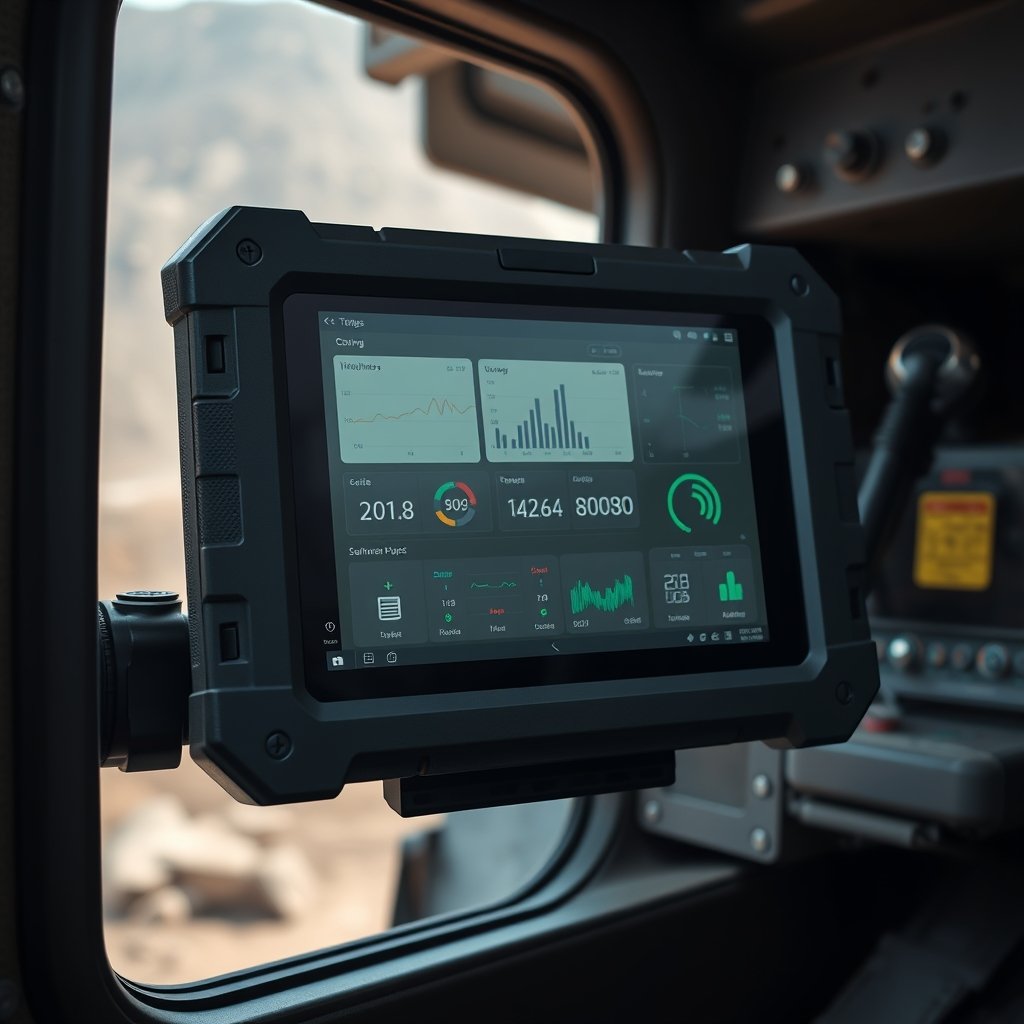
Teams gain confidence fast. Data accuracy rises. Fleet managers shift from reactive fixes to predictive planning.
Feature-to-Benefit Matrix
| Technical Feature | Operational Benefit |
|——————————–|————————————————–|
| Fanless aluminum chassis | Zero dust-related failures; maintenance drops 65% |
| MIL-STD-810H certification | 60-month service life; replacement CapEx falls 58% |
| 9-60V wide-voltage input | Eliminates power-related downtime; saves $430 per vehicle yearly |
| Direct J1939 CAN bus interface | Real-time telematics; 18% fuel reduction documented |
| IP67 sealed connectors | Survives high-pressure washdowns; extends service intervals |
| Glove-compatible sunlight-readable display | Faster pre-start checks; 27 minutes saved per shift |
| 7-year component lifecycle support | Predictable TCO; removes obsolescence risk |
ROI & TCO Analysis
Acquisition cost looks higher at first glance. Five-year totals reveal different realities. Hardware expense forms one piece.
Maintenance cycles add up fast. Opportunity cost from idle equipment dominates. Three factors control the final figure.
Consumer tablets start at $680. Replacements hit every 11 months. Installation costs $290 each time.
Downtime averages 4.2 hours per incident. Equipment rates reach $185 hourly. TCO climbs to $6870 per vehicle.
Emdoor units open at $2490. One refresh occurs at month 62. Installation falls to $110.
Downtime shrinks to 0.3 hours per event. TCO lands at $2980. Net savings reach $3890 per vehicle.
Scale across 150 units. Direct savings exceed $583500 before efficiency gains. Fuel cuts and tire life add further value.
Payback arrived in nine months at one iron ore site. Support tickets dropped 41 percent at another underground operation. Numbers come from live deployments.
Variance shrinks from 34 percent to 6 percent. Cash flow predictions improve. Planning becomes precise.
Procurement gains real leverage. Vendors prove connector retention and surge protection with data. Validation focuses on results.
- Hardware savings: $3890 per vehicle over 5 years
- Fuel savings: $1840 per vehicle over 5 years
- Tire savings: $970 per vehicle over 5 years
- Total documented ROI: $2.1 million for 150-unit fleet
Rugged platforms stop cost leakage. Consumer devices create constant drain. Margin expands instead.
Actionable FAQs
How does wide-voltage input protect against alternator load dumps in mining trucks?
Emdoor units integrate TVS diodes and polymer fuses that clamp transients up to 200V for 400ms. This exceeds SAE J1455 requirements and prevents CPU resets that plague consumer devices during engine cranking.
What MTBF can be expected from Emdoor rugged mobile computers under 18-hour daily mining duty cycles?
Field data shows 168,000 hours MTBF across 3400 deployed units. This translates to one hardware failure every 62 months per vehicle at 20-hour daily operation.
Which protocols does the integrated CAN bus controller support for legacy and modern FMS platforms?
The controller natively supports J1939, J1979, OBD2, and ISO 15765-4. Dual CAN channels allow simultaneous reading of engine and body controllers while maintaining independent FMS uplink.
Implementation Roadmap for Rugged Mobile Computers for Mining Fleet Management
Pilot programs deliver proof. Select 15 highest-cost vehicles first. Map CAN bus parameters early.
Install units with pre-loaded FMS clients. Record vibration logs daily. Track thermal performance hourly.
Engineers adjust IO mappings on site. Satellite fallback activates during tests. Connectivity gaps close immediately.
Review failure rates after 90 days. Compare fuel logs month over month. Tire wear data confirms gains.
Scale follows validation. Full fleet rollout aligns with maintenance cycles. Support contracts match seven-year component life.
Data reveals the gap. Savings models update live. Deployment risk stays low.
Rugged mobile computers for mining fleet management now anchor cost control strategies. Extended life merges with efficiency gains and budget stability. Competitive position strengthens.
Request a 90-day trial today. Measure vibration tolerance and integration speed on your sites. Contact the Emdoor team. Turn proof into fleet-wide deployment.