7 Insights That Transform Your Industrial PC vs PLC Decision
Industrial PC vs PLC selection sets the foundation for data velocity and system longevity in harsh industrial settings. Emdoor platforms boot native operating systems that support MQTT, Node-RED, Python scripts, and containerized applications without translation layers. PLCs trap teams inside proprietary ecosystems.
Technical Deep Dive
Software integration costs dominate automation budgets.
Emdoor industrial PCs boot full Windows or Linux distributions. Engineers deploy production-ready IoT applications within hours. Codesys soft PLC runtime executes deterministic control. Separate containers run predictive models. PLCs lock users into scan-cycle logic and vendor IDEs. Flexibility disappears.
Native IoT protocols eliminate gateways. Local MQTT v5 brokers publish telemetry directly to cloud platforms. OPC UA servers expose structured data to MES and ERP systems. Intervals stay below 50 ms. Dual Ethernet ports keep fieldbus and corporate networks isolated. Built-in cellular modules maintain sessions through power events.
Thermal design sustains 24/7 operation. Aluminum chassis functions as heatsink. Fans stay absent. MTBF ratings surpass 100000 hours at 55 °C. Wide-voltage circuitry accepts 9-36 V input with surge suppression. Forklifts stop interrupting power.
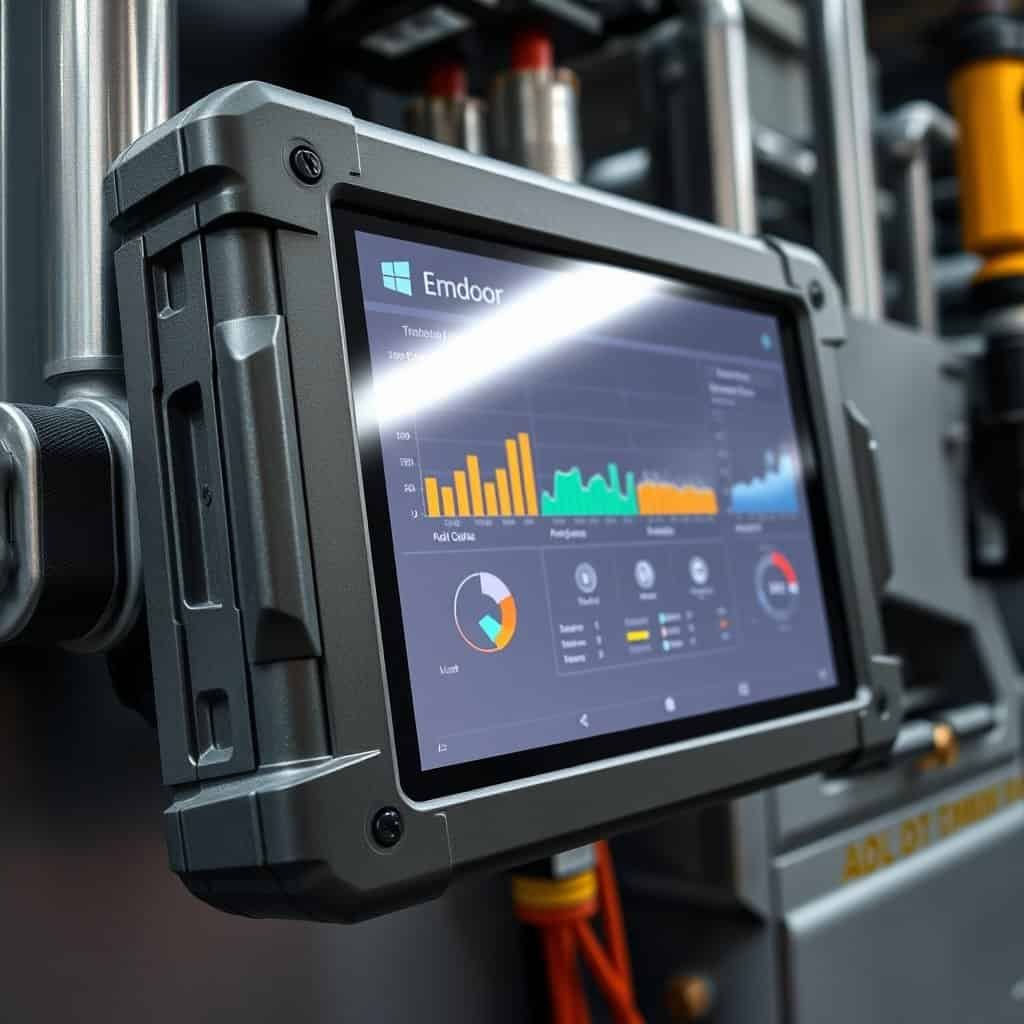
Field data from cold-chain warehouses confirms reliability. Vibration spectra destroy consumer hardware. These units stay operational. IP67 enclosures block dust and washdown spray. MIL-STD-810H certification validates survival under shock loads. Connector retention survives daily impacts.
Deterministic control remains achievable. PREEMPT_RT kernels deliver single-digit millisecond jitter. Real-time threads coexist with analytics containers. Plants gain vision inference. Vibration signature analysis runs without separate PCs.
Container orchestration changes maintenance models. Docker images update independently. Kubernetes orchestrates rollouts across fleets. Control loops continue uninterrupted.
Environmental resilience proves decisive. Surge protection and ESD circuits guard sensitive silicon. EMC compliance preserves signal integrity beside variable frequency drives. IO expansion multiplies options. CAN bus interfaces connect legacy actuators. RS-485 ports integrate weighing systems. Timed digital modules enable precise triggering. One chassis replaces multiple legacy devices.
Deployment risk shrinks. Validation cycles compress from months to weeks. Seven-year lifecycle support protects capital budgets. Procurement teams avoid mid-project obsolescence.
Industrial PC vs PLC in Demanding Environments
Vibration and temperature extremes expose platform weaknesses fast. Consumer-grade components fail inside weeks. Emdoor units absorb 40 G shocks and 5-500 Hz vibration without error.
Warehouses present combined stressors. Dust infiltrates every seam. Moisture condenses during temperature swings. IP67 sealing combined with wide-temperature capacitors keeps clocks accurate. Maintenance shifts to scheduled tasks.
Power fluctuations test recovery mechanisms. Brownouts occur daily on factory floors. Supercapacitor backups prevent data corruption. BIOS-level watchdogs restart processes within seconds. Industrial SSDs endure millions of write cycles.
Glare and glove operation add usability demands. Screens stay readable under high lux. Capacitive touch maintains accuracy through thick material. Operators avoid removing protective gear.
Thermal load management dictates uptime. Passive cooling eliminates fan-related failures. Heat dissipation scales with ambient conditions. Systems run at full load without throttling.
These factors compound. One wrong choice inflates TCO. The right platform delivers predictable performance.
Why Industrial PC vs PLC Matters for Edge Analytics
Edge computing alters data economics.
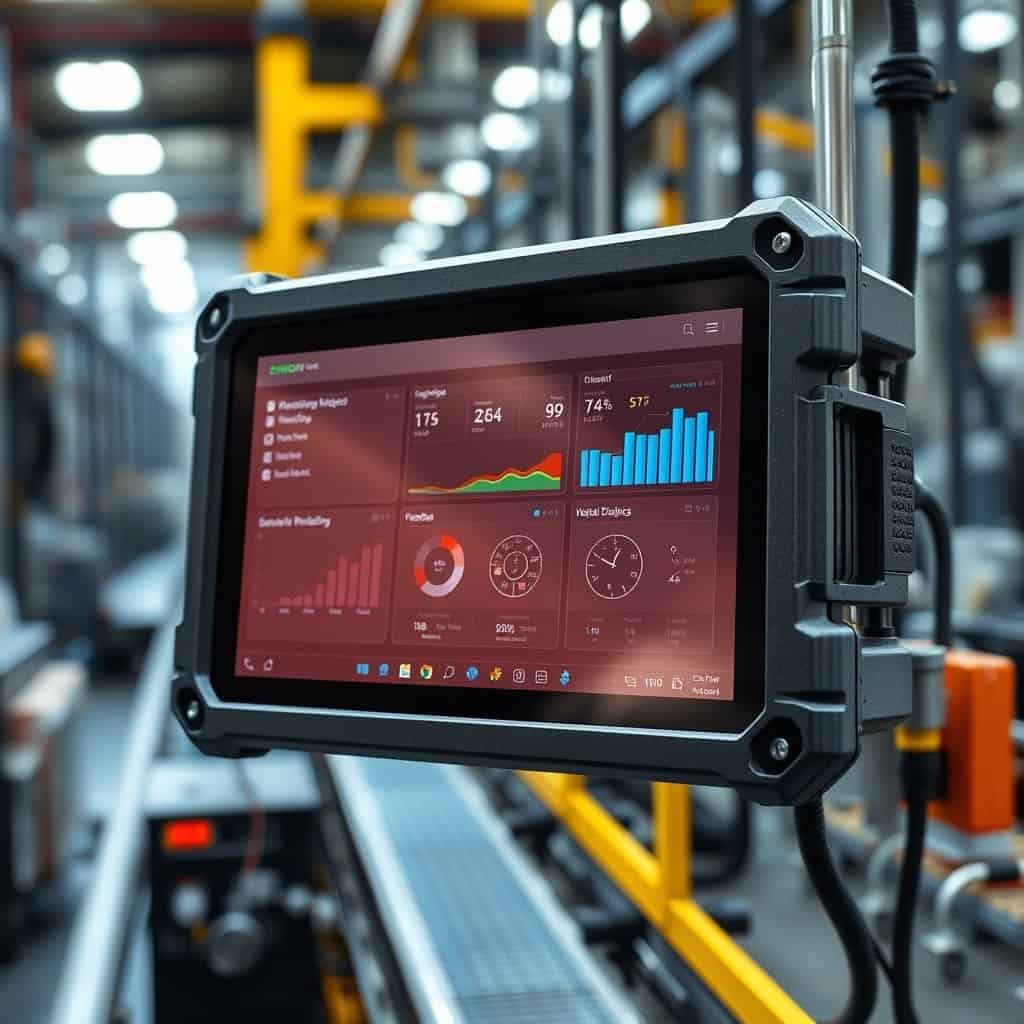
Modern production lines generate terabytes daily. Industrial PCs ingest raw streams then distill insights locally. Latency collapses. Bandwidth charges drop. Predictive models train on fresh data instead of delayed batches.
PLCs transmit only status bits. They lack cycles for machine learning or spectral analysis. Supplemental computers add failure points and integration overhead.
Emdoor platforms close the gap. NXP or Intel multi-core processors handle HMI rendering, inference engines, and gateway functions concurrently. Glare-resistant screens remain readable under high lux. Capacitive touch maintains accuracy through glove operation.
Power instability tests every layer. Supercapacitor backups prevent corruption during brownouts. BIOS-level watchdog recovery restarts processes in seconds. Industrial SSDs endure millions of write cycles.
System integrators report 40 % faster commissioning. One node supervises distributed PLCs while feeding Azure Digital Twins. Modbus TCP runs alongside EtherCAT. Legacy Allen-Bradley racks continue without modification.
Thermal cycling in cold stores reveals weaknesses fast. Consumer components drift. Industrial capacitors and wide-temperature memory keep timing accurate. Maintenance shifts from emergency repairs to scheduled inspections.
This OT-IT convergence creates trustworthy digital threads. Sensor values flow to dashboards without protocol translation errors. Decision makers receive clean data.
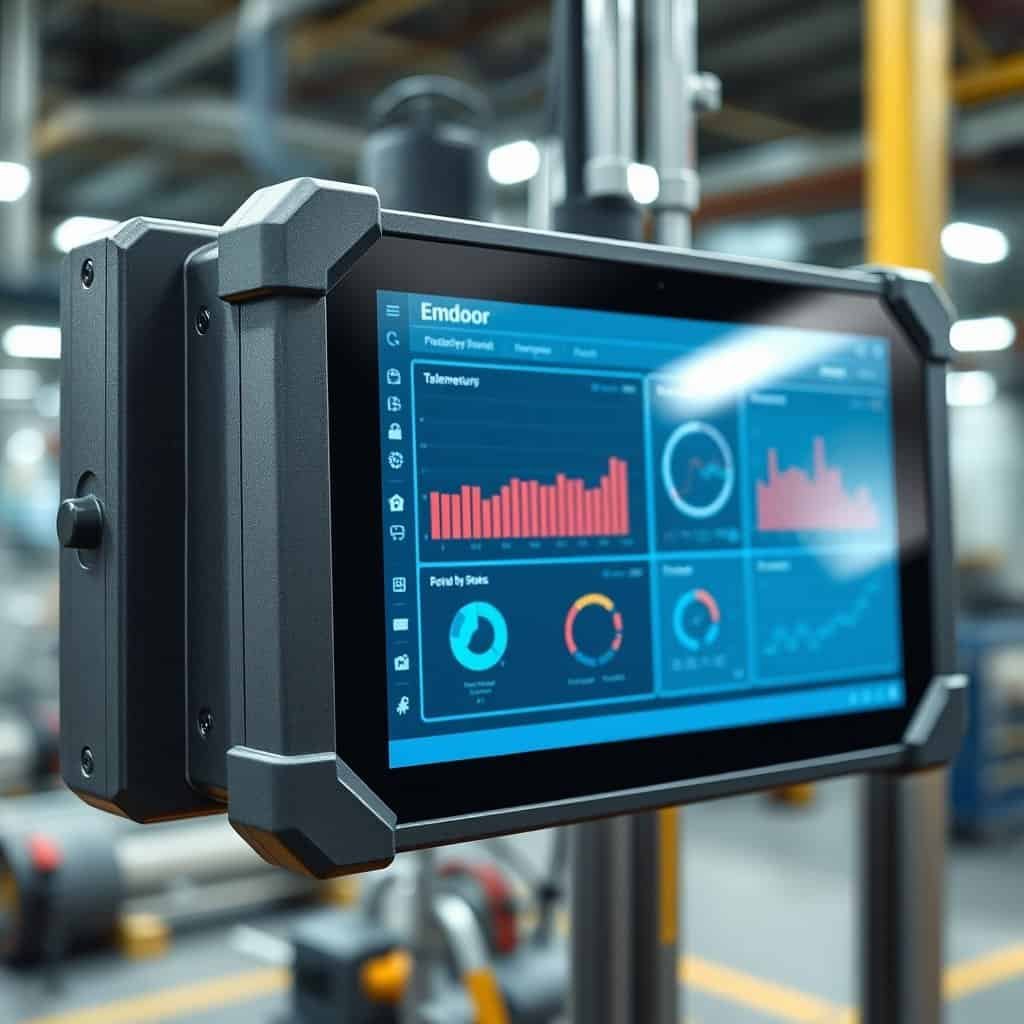
In manufacturing automation environments, the difference compounds daily. Link to standards like OPC UA reveals why native servers outperform gateways. Teams gain direct access to structured information.
Feature-to-Benefit Matrix
| Technical Feature | Operational Benefit |
|——————————–|———————————————————-|
| Fanless aluminum chassis | Eliminates dust-related failures in manufacturing facilities |
| Intel/NXP multi-core processors| Runs edge AI models and HMI simultaneously |
| Wide-voltage 9-36V input | Survives forklift and vehicle power fluctuations |
| Multiple CAN/RS232/RJ45 ports | Direct integration with legacy equipment and IoT sensors |
| MIL-STD-810H & IP67 rating | 100,000+ hour MTBF in extreme temperatures and vibration|
| Native Docker & MQTT support | Zero-gateway cloud connectivity for predictive maintenance |
| Linux/Windows OS options | Uses existing engineering team skills, cuts training costs |
ROI & TCO Analysis
Five-year ownership costs expose clear advantages.
Initial hardware outlay sits higher than basic PLCs. Engineering labor savings erase the delta inside nine months.
- 40 % reduction in custom driver development through standard libraries
- Elimination of middleware servers and OPC licensing fees
- Remote container updates cut site visits by 65 %
- Consolidated spare parts inventory drops 70 %
- Predictive maintenance from local vibration models avoids $18,000–$35,000 per unplanned line stop
Downtime expenses dominate TCO models. Redundant storage and containerized failover limit outages to seconds. Maintenance windows shrink toward zero.
Software expenses collapse. Single platforms perform historian, analytics, and gateway roles. Teams retire proprietary ladders and vendor support contracts.
Lifecycle planning protects budgets. Component availability spans typical seven-year refresh cycles. Recertification costs stay avoided. Procurement risk falls when one supplier covers compute, IO, and connectivity.
Energy consumption stays modest. Fanless architecture draws less power than combined PLC-plus-PC deployments. Savings scale across hundreds of nodes.
Vendor consolidation simplifies contracts. One purchase order replaces multiple. Standardization across plants reduces training and documentation overhead.
TCO favors the flexible option.
Procurement teams track every variable. Supply chain stability matters more than sticker price. Emdoor maintains component stocks for full lifecycle support. Obsolescence notifications arrive early.
Validation protocols compress timelines. Hardware arrives pre-loaded with tested images. Engineers focus on process logic instead of driver conflicts.
Actionable FAQs
What operating system delivers optimal IoT protocol support on industrial PCs?
Linux with PREEMPT_RT patch combined with MQTT and Node-RED provides the lowest latency for IoT data pipelines. Windows 10 IoT Enterprise offers better commercial software compatibility. Emdoor validates both images with pre-configured CANopen and EtherCAT stacks.
How do you achieve deterministic control with an industrial PC?
Use real-time Linux kernels or install Windows Real-Time extension. Pair with Emdoor’s hardware-timed digital I/O modules. This configuration delivers 2ms jitter performance while retaining full access to containerized analytics applications.
Can one Emdoor industrial PC replace both PLC and IoT gateway?
Yes, in 70% of supervisory applications. The PC executes soft PLC logic through Codesys or TwinCAT while running cloud agents. Safety-critical loops remain on dedicated safety PLCs connected via Profinet. This hybrid model reduces system complexity and single points of failure.
Your industrial PC vs PLC decision sets the architecture for the next decade of digital threads. Map deterministic control loops against expected analytics workloads first. Test candidate hardware under actual vibration, temperature, power transients, and glove-operation conditions next.
Emdoor configures proof-of-concept industrial pc units that demonstrate integration speed and data transparency gains. Share control logic, target cloud platforms, and environmental profile with the engineering team. They return validated images within days.
Complement fixed installations with b2b rugged devices and, where mobility matters, rugged tablet platforms from the same ecosystem. Control reliability improves. Predictive maintenance scales. Digital transformation accelerates.
Contact Emdoor engineering today. Begin the technical assessment. Your next deployment deserves hardware engineered for seamless integration that lasts.