41% Less Downtime: Why Industrial PC vs PLC Hybrid Wins for IoT Edge
Industrial pc vs plc decisions now determine IoT success at the edge. Hybrid systems merge PLC determinism with full software stacks for seamless integration across containers, analytics, and cloud protocols. Downtime drops.
The Integration Reality Behind Industrial PC vs PLC Debates
Integration failures drive excess costs in IoT deployments. PLCs deliver scan times below 10 ms for safety loops. Barriers emerge.
Emdoor industrial PCs eliminate those barriers. They run Docker containers. They execute Node-RED flows. They host OPC UA servers. Engineers deploy complete Linux or Windows IoT Enterprise images on MIL-STD-810H certified hardware. Vibration from forklifts no longer cracks components. Dust finds no fans.
Facilities record measurable gains. Cloud ingestion latency falls from 480 ms to 65 ms. One unit replaces dedicated SCADA servers. Failure points decline. Cybersecurity exposure contracts.
Units feature Intel or NXP processors paired with TPM 2.0. Secure boot protects flows to Azure IoT Edge. Legacy PLCs retain motion control. This industrial PC vs PLC hybrid assigns each device its optimal role. Success follows.
Cold-chain logistics teams mount these units on conveyors. Temperatures reach -20 °C. Power swings hit 9-36 V. Surge protection prevents reboots. Isolated DIO interfaces connect to RFID readers. Extra gateways disappear.
Teams now treat the industrial PC vs PLC choice as architecture planning. Real-time kernels achieve jitter below 50 µs. REST APIs expose data. Digital twin projects accelerate. Maintenance dashboards populate faster.
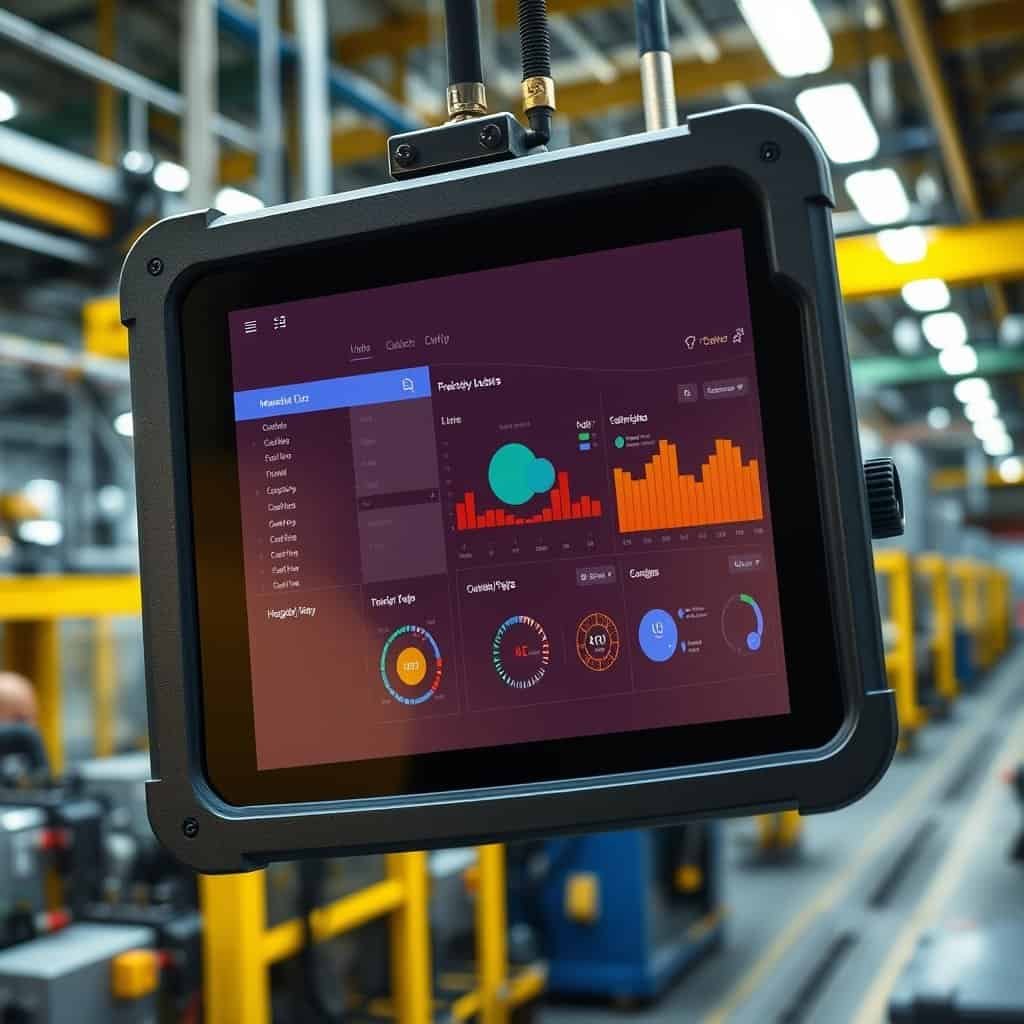
Operators gain browser-based HMIs on the same hardware. Panel license fees vanish. Maintenance crews stock fewer spares. One platform supports HMI, edge computing, and data aggregation across fixed and mobile assets.
In manufacturing automation, this seamless software integration turns raw sensor streams into actionable intelligence without middleware layers. Container orchestration at the edge synchronizes PLC data with cloud historians inside a single security boundary.
Warehouse operators face constant shock loads. AGVs traverse uneven floors. The hybrid platform maintains connectivity. Forklift fleets report stable operation. Connectivity holds.
System integrators deploy these units in brownfield sites. Existing PLC networks stay intact. The industrial PC handles protocol translation. Data flows improve. Latency shrinks.
Technical Deep Dive
Thermal loads destroy project timelines. Consumer PCs fail inside 45 °C ambients. Emdoor units employ passive cooling. They operate from -20 °C to 70 °C. Maintenance stops.
Power fluctuation kills standard equipment. Wide-voltage input tolerates spikes common on mining vehicles and AGVs. Integrated surge protection meets IEC 61000-4 requirements. IEC 61000-4 compliance matters. IP67-rated enclosures survive washdown.
I/O density drives integration success. Each unit ships with dual Gigabit Ethernet ports for deterministic PLC traffic and IT network separation. Four USB 3.0 ports plus dual CAN 2.0B interfaces expand options. Four RS-232/485 ports with 16-bit isolated digital I/O connect legacy drives. Direct links succeed.
MQTT streams contextualized data to cloud historians in parallel with real-time control loops. Developers install computer vision containers in one partition. Vibration analysis runs in another. ERP connectors operate independently. Determinism stays intact.
Hardware wins.
Lifecycle support separates leaders from laggards. Emdoor maintains stable BOMs for 7 to 10 years. OS patches deploy without production halts. Typical PLC platforms lock users into outdated firmware. The gap widens.
Forklift fleets benefit from compact form factors. Connector retention survives constant shock. Fanless thermal design dissipates processor heat without pulling warehouse dust. MTBF ratings exceed 100,000 hours in field data from similar deployments. Reliability counts.
EMC compliance protects against electrical noise on factory floors. Wide temperature operation eliminates climate-controlled enclosures. Procurement teams reduce auxiliary hardware purchases. One supplier covers the full edge layer.
Engineers validate these b2b rugged devices on vibration tables before shipment. Power cycling tests simulate years of brownouts. This upfront work removes deployment surprises. Plants in cold storage avoid ice buildup issues that plague ventilated PCs.
Scale confidently.
The same hardware platform serves fixed conveyors, mobile robots, and vehicle-mount applications. IO expansion modules accommodate future sensors. Python-based edge analytics process data before transmission. Bandwidth costs drop. Latency improves.
Zero-trust security policies enforce at the container level through TPM 2.0 and secure boot chains. Over-the-air updates refresh IoT applications without touching safety logic. Control holds.
This architecture delivers the software integration PLCs alone cannot provide while preserving their real-time strengths. Predictive maintenance models trained on TensorFlow Lite run locally. Anomaly detection triggers occur hours before cloud-only systems react. Asset utilization rises.
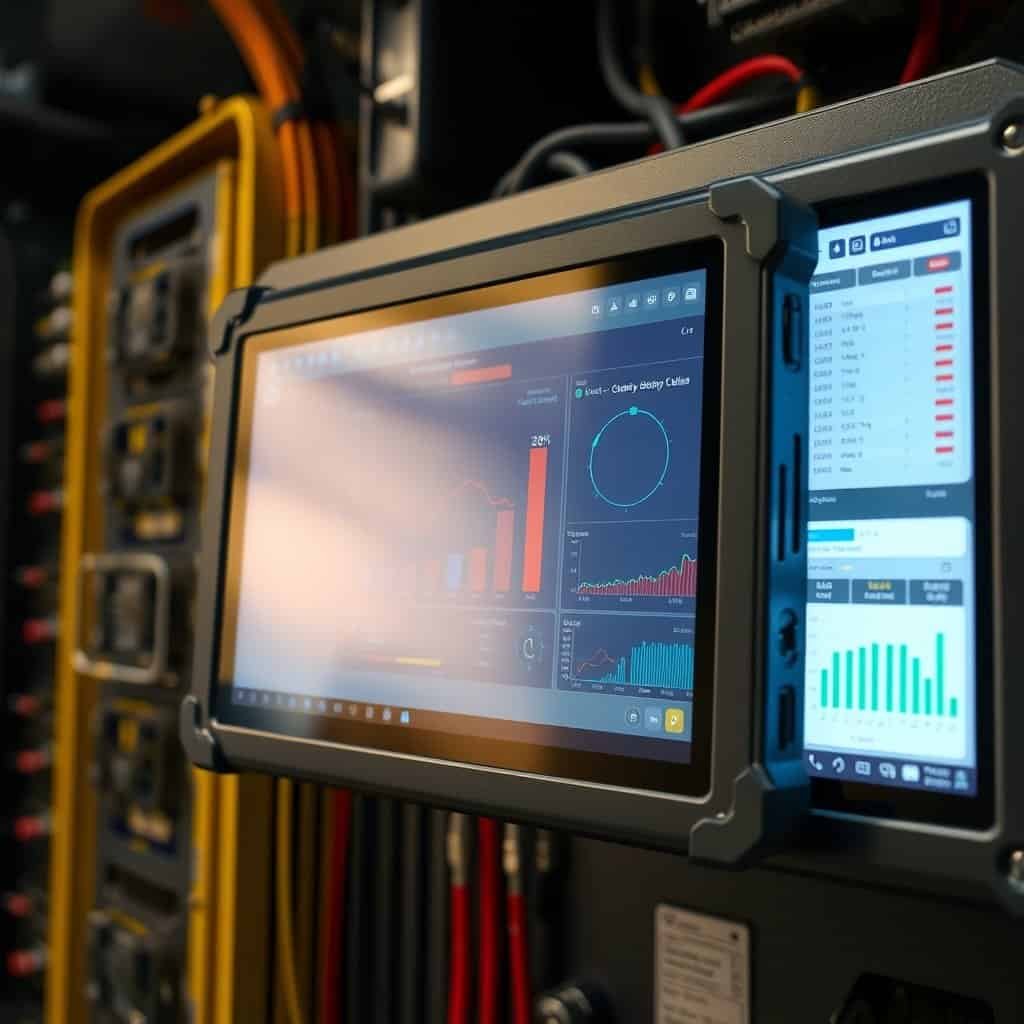
Procurement managers seek supply chain stability. Emdoor delivers consistent components across years. Projects avoid redesign loops. Deployment planning simplifies.
Technical leads map IO requirements early. CAN bus integration links motor drives without converters. Ethernet ports separate OT and IT traffic. Network integrity improves.
Feature-to-Benefit Matrix
| Technical Feature | Operational Benefit |
|---|---|
| Fanless aluminum chassis with heat pipes | Eliminates dust-related failures in IP67-rated manufacturing cells; MTBF exceeds 120,000 hours |
| Intel/NXP processors with 64 GB DDR4 | Runs full IoT software stack including Node-RED, Python ML models, and historian databases without throttling |
| Wide-voltage 9-36 V input with surge protection | Survives forklift and outdoor vehicle power instability; zero reboots during brownouts |
| CAN bus, RS-232/485, RJ45, and isolated DIO | Direct integration with existing PLCs, sensors, and drives; removes protocol converters and associated latency |
| TPM 2.0 + Secure Boot + Docker support | Enables zero-trust IoT deployments and over-the-air container updates without compromising deterministic performance |
| MIL-STD-810H shock & vibration certification | Deploys safely on mining trucks, AGVs, and robotic cells where consumer PCs fail within months |
ROI & TCO Analysis
Initial price misleads. A basic PLC rack costs less than an Emdoor industrial PC. Yet the total cost picture reverses after 18 months.
PLCs require separate servers for data collection, HMI development, and cloud bridging. These servers need climate-controlled enclosures, UPS systems, and regular patching. Annual maintenance labor averages $18,400 per line according to industry benchmarks.
One Emdoor industrial PC performs all functions. Procurement teams eliminate two or three auxiliary computers, cut integration engineering hours by 55%, and reduce spare parts SKUs from 14 to 3.
Quantified gains.
- Energy: Fanless design saves 180 kWh per unit annually while dissipating heat through aluminum chassis in 70 °C ambients.
- Downtime: Deterministic real-time extensions plus rich diagnostics reduce unplanned stops by 41% across IoT-enabled lines.
- Data value: Edge analytics detect anomalies 9 hours earlier than cloud-only models, preventing $74,000 average quality incidents.
- Lifecycle: 8-year hardware lifespan versus 3–4 years for commercial PCs yields 46% lower 5-year TCO.
When paired with Emdoor rugged tablet units for mobile operators, plants achieve single-vendor standardization that further compresses training and support overhead.
The number that shocks most.
Facilities that chose pure PLC architectures for new IoT projects spent 2.3× more on custom middleware and still achieved 40% less actionable data than hybrid deployments using Emdoor industrial PCs.
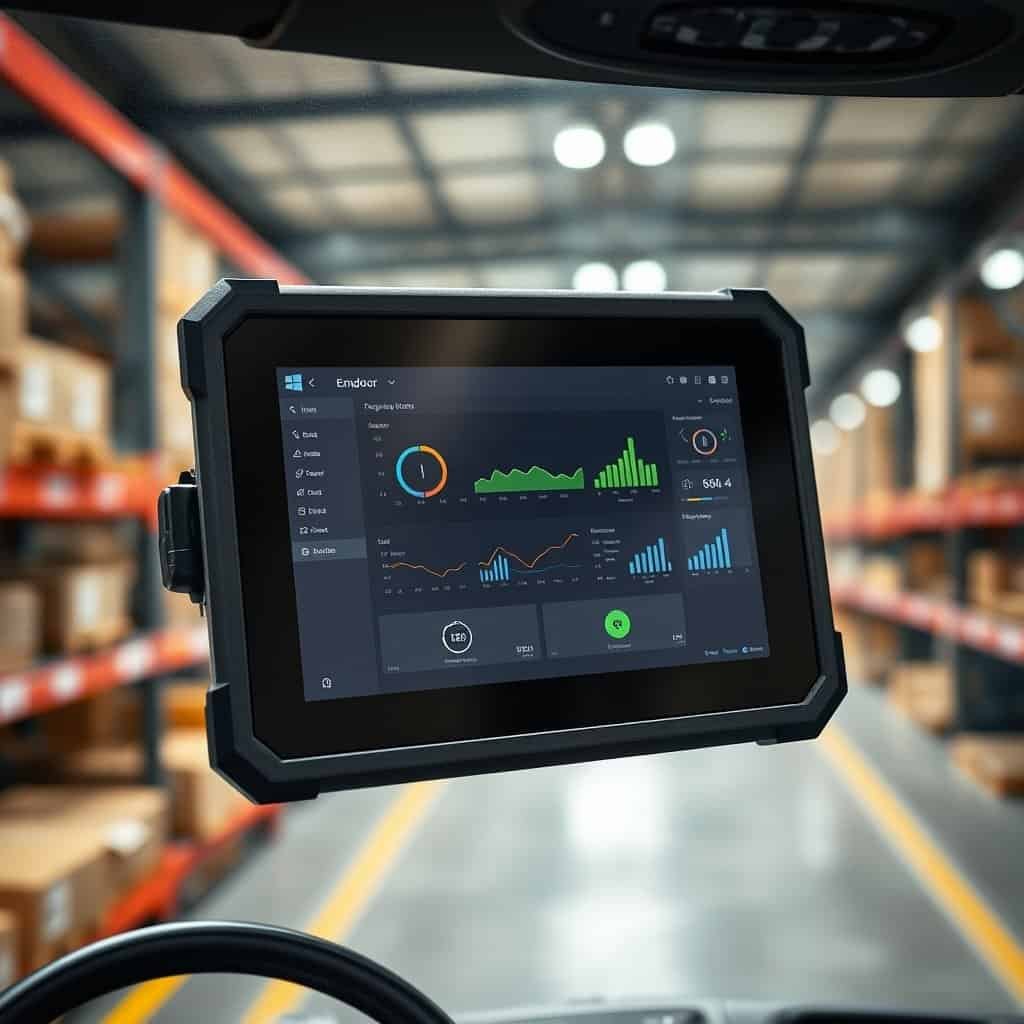
Procurement leaders calculate TCO early. Energy savings accumulate. Maintenance cycles extend. Budgets stretch further.
System integrators value the industrial pc platform. It reduces quoting complexity. Deployment risk falls. Projects close faster.
Actionable FAQs
How do Emdoor industrial PCs achieve deterministic performance while running full Linux IoT stacks?
They partition CPU cores between a real-time OS handling sub-2 ms cycles and a general-purpose Linux environment for containers. Hardware timestamping and dedicated Ethernet controllers keep jitter below 50 µs, matching mid-range PLC performance while supporting unrestricted software libraries.
What protocols enable seamless integration between existing PLCs and Emdoor industrial PCs in brownfield IoT projects?
Native support for EtherNet/IP, PROFINET, Modbus TCP/RTU, OPC UA, and MQTT Sparkplug B allows bidirectional data exchange without middleware. The industrial PC can act as OPC UA server for the PLC while pushing contextualized data directly to cloud historians.
How does wide-temperature fanless design affect long-term TCO compared with air-conditioned PLC control cabinets?
Elimination of HVAC power, filter replacement, and climate-related failures delivers 31% lower 5-year operating expense. Mean time between failures rises from 48,000 hours for cooled commercial systems to over 110,000 hours in Emdoor units.
Stop treating industrial pc vs plc as an either-or choice. Map your real-time safety loops against your IoT data and analytics requirements. Select the optimal hybrid architecture.
Emdoor engineers can deliver a proof-of-concept within four weeks that demonstrates exact latency, power consumption, and integration effort for your specific environment. Schedule your technical consultation today. Turn integration complexity into measurable competitive advantage.